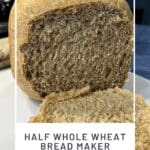
Half Whole Wheat Bread Maker Sourdough (Soft & Hearty)
Half whole wheat bread made in a bread maker is so easy. It’s soft enough for sandwiches, sturdy enough for toast, and full of that familiar sourdough flavor we all love. Best of all, it’s approachable. Even if you’re new to sourdough or baking with whole wheat flour.
Servings: 10 slices, 1 pound loaf and 1 1/2 pound loaf
Calories: 257kcal
As an Amazon Associate I earn from qualifying purchases.


Ingredients
1½-Pound Loaf
- 2 Teaspoon Active Dry Yeast or instant yeast
- 1 ½ Teaspoon Table Salt (9g)
- 1 ½ Teaspoons Granulated Sugar
- 1 ¼ Cups Whole Wheat Flour (150g)
- 1 ¼ Cups All-Purpose Flour (150g), or bread flour
- 2 Cups Sourdough Starter (454g), ripe (fed) or discard
- 2 Tablespoon Vegetable Oil (25g)
- 5 to 7 Tablespoons Lukewarm Water (71g–99g) as needed
1-Pound Loaf
- 1 Teaspoon Active Dry Yeast or instant yeast
- 1 Teaspoon Table Salt (6g)
- 1 Teaspoon Granulated Sugar
- ¾ Cup Whole Wheat Flour (90g)
- ¾ Cup, plus 2 Tablespoons All-Purpose Flour (110g), or bread flour
- 1⅓ Cups Sourdough Starter (301g), ripe (fed) or discard
- 1 Tablespoon Vegetable Oil (13g)
- 4 to 5 Tablespoons Lukewarm Water (57g–71g) as needed
Instructions
- Measure the Flour Correctly. For best results, weigh your flour. If measuring by volume, gently spoon flour into the measuring cup and level it off. Avoid scooping directly from the bag, which can pack in too much flour. Especially important when using whole wheat.
- Add Ingredients to the Bread Machine. Place all ingredients into the bread pan in the order recommended by your bread machine manufacturer.2 Teaspoon Active Dry Yeast, 1 ½ Teaspoon Table Salt, 1 ½ Teaspoons Granulated Sugar, 1 ¼ Cups Whole Wheat Flour, 1 ¼ Cups All-Purpose Flour, 2 Cups Sourdough Starter, 2 Tablespoon Vegetable Oil, 5 to 7 Tablespoons Lukewarm Water
- Choose the Right Cycle. Select the French Bread cycle or another long-rise setting. Whole wheat sourdough benefits from extra time to develop structure and flavor.
- Check the Dough During Kneading. About 10 minutes into kneading, open the lid and check the dough. It should form a soft, slightly tacky dough ball. If it looks dry or stiff, add water 1 tablespoon at a time. If it looks overly sticky or loose, sprinkle in a little flour
- Whole wheat dough may feel slightly firmer than white dough, but it should still be smooth and elastic.
- Bake and Cool. When the cycle finishes, remove the bread promptly and cool on a wire rack. Let the loaf cool completely before slicing to avoid a gummy texture.
Notes
Notes from the Kitchen
Why Whole Wheat Needs a Little Extra Care Whole wheat flour absorbs more liquid than white flour and contains the bran and germ of the wheat kernel. That’s what gives it extra nutrition. But it also means the dough needs a bit more water and a longer rise to stay soft and well-shaped. Don’t worry, the bread maker handles most of this for you. You’ll just want to keep an eye on the dough during the first knead. Water amounts are approximate and will vary depending on your sourdough starter’s hydration. The exact amount of water you’ll need depends on the hydration of your sourdough starter. Starters can vary widely—from thick and stiff to loose and pourable. The goal is always the same: a soft, cohesive dough that holds its shape as it kneads. Trust your eyes more than the numbers.- The dough should be soft and slightly tacky, not dry or stiff.
- Always check the dough during the first 10 minutes of kneading and adjust as needed.
- Whole wheat dough may feel a bit firmer than white dough, but it should still form a smooth dough ball.
- Let the loaf cool completely before slicing to avoid a gummy crumb.
Tips from Our Bakers
- Start with Less Water. Whole wheat absorbs slowly, so begin with the lower amount of water and add more as needed.
- Discard Works Fine. Use discard that has been fed within the last week for best rise and flavor.
- Oil vs. Water. Vegetable oil helps keep the crumb soft. For a crustier loaf, replace the oil with water.
- Best Bread Machine Cycles. French or whole-grain cycles work best due to their longer rise times.
- Programmable Machines. If your machine allows custom settings, aim for longer rises similar to French bread cycles.
Nutrition
Calories: 257kcal | Carbohydrates: 46g | Protein: 7g | Fat: 5g | Saturated Fat: 1g | Polyunsaturated Fat: 3g | Monounsaturated Fat: 1g | Trans Fat: 0.03g | Sodium: 3mg | Potassium: 113mg | Fiber: 4g | Sugar: 1g | Vitamin A: 2IU | Vitamin C: 0.003mg | Calcium: 11mg | Iron: 2mg