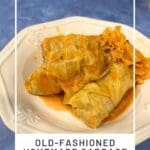
Old-Fashioned Homemade Cabbage Rolls with Beef and Rice
Make old-fashioned homemade cabbage rolls with ground beef and rice. This family recipe makes 40–45 cabbage rolls and freezes beautifully for future meals.
Servings: 10 servings, about 40 cabbage rolls
Calories: 453kcal
As an Amazon Associate I earn from qualifying purchases.
Equipment

Ingredients
Instructions
- Trim off the stem of the cabbage heads. Bring a large kettle of water to a boil. Add one cabbage head at a time and carefully remove the outer leaves one at a time as they soften. Continue until each cabbage head is about half its original size. Set the leaves aside to cool.2 Heads Cabbage
- In a large mixing bowl, combine the ground beef, diced onion, eggs, uncooked rice, salt, and pepper. Mix with your hands until thoroughly combined.3 Pounds Ground Beef, 1 Medium Onion , 3 Large Eggs, 1 1/2 Cups Rice , 1 Teaspoon Salt, 1 Teaspoon Pepper
- Place a small handful of the ground beef mixture near the base of a cabbage leaf. Fold in the sides and roll up securely. Repeat with the remaining filling and cabbage leaves.
- Arrange the cabbage rolls seam-side down, dividing them between two 5-quart kettles.
- Chop the remaining cabbage, removing the tough center stems. Divide the chopped cabbage between the two kettles, placing it around and over the rolls.
- Divide the tomato soup and ketchup between the two kettles. Add enough water to each kettle to bring the liquid level to approximately 1 inch above the cabbage rolls.10.75 Ounces Tomato Soup, 1 Cup Ketchup, Water
- Cover each kettle with a lid and bring to a boil over medium heat. Once boiling, keep the lids slightly ajar and continue cooking for approximately 1 hour, or until the cabbage is tender, the rice is cooked, and the ground beef reaches an internal temperature of 160°F.
Notes
- Yield: This recipe makes approximately 40–45 cabbage rolls, or about 10 servings when allowing 4 rolls per person.
- Batch Size: Prepare all the cabbage rolls first, then divide them between two 5-quart kettles for cooking.
- Rice: Use uncooked long-grain white rice. It cooks inside the cabbage rolls as they simmer.
- Cabbage Preparation: Boiling the cabbage is my preferred method, but you can also freeze the whole cabbage head and thaw it before separating the leaves.
- Storage: Refrigerate leftovers in airtight containers with some cooking liquid for 3–4 days.
- Freezing: Freeze in meal-sized portions with some of the tomato cooking liquid for up to 2–3 months for best quality.
Nutrition
Calories: 453kcal | Carbohydrates: 25g | Protein: 27g | Fat: 28g | Saturated Fat: 11g | Polyunsaturated Fat: 1g | Monounsaturated Fat: 12g | Trans Fat: 2g | Cholesterol: 97mg | Sodium: 724mg | Potassium: 941mg | Fiber: 5g | Sugar: 14g | Vitamin A: 422IU | Vitamin C: 72mg | Calcium: 109mg | Iron: 4mg