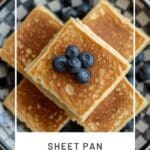
Sheet Pan Pancakes in Under 20 Minutes
Make these Sheet Pan Pancakes in Under 20 Minutes! Feed a crowd with ease. You deserve to sit down with your coffee still hot. You deserve delicious pancakes that come out of the oven golden brown, fluffy, and ready to slice into perfect squares. And you deserve a method that doesn't sacrifice texture just because you're feeding more than two people.
Servings: 8 Servings
Calories: 151kcal
As an Amazon Associate I earn from qualifying purchases.
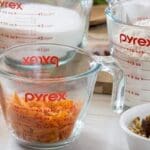
Ingredients
- 2 Cups Pancake Mix
- 4 Large Eggs
- 4 Tablespoons Butter melted
- 1 1/2 Cups Milk only use enough to make the batter runny, still sticks to whisk
Instructions
- Preheat your oven to 425 degrees F. Do this first. The oven needs to be fully hot before the pan goes in, or your pancakes will spread too much and bake unevenly. If your oven runs cool, bump it to 435.
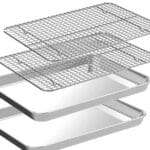
- Lightly grease a baking sheet. Use butter, cooking spray, or a thin layer of oil. Don't skip this or you'll be scraping pancake off the pan later. A standard half-sheet pan works perfectly. If you use a quarter-sheet, your pancakes will be thicker and need a few extra minutes.
- Add the pancake mix to a large bowl. Make sure there are no clumps. If your pancake mix has been sitting in the pantry for a while, give it a whisk to aerate it before adding the wet ingredients.2 Cups Pancake Mix
- Add 4 eggs and 4 tablespoons of melted butter. Whisk these wet ingredients together first before adding milk. This helps the butter emulsify into the batter instead of pooling.4 Large Eggs, 4 Tablespoons Butter
- Add milk slowly until the batter is runny but still clings to your whisk. Start with 1 cup, whisk thoroughly, then add the rest in small splashes. You're looking for a consistency that drips off the whisk but leaves a thin coating. If you accidentally add too much milk, whisk in a tablespoon or two more of pancake mix to thicken it back up.1 1/2 Cups Milk
- Pour the pancake batter into your greased sheet pan. It should spread almost to the edges on its own. If it doesn't, use a spatula to nudge it. You want an even layer, about half an inch thick.
- Bake for 12 to 15 minutes. Check at 12 minutes. The top should be golden and set, and the edges should be pulling away slightly from the pan. If the center still jiggles when you shake the pan, give it another 2 to 3 minutes. Oven temps vary, so use visual cues over the clock.
- Let it cool for 2 minutes, then slice into squares. Use a bench scraper or sharp knife. Serve immediately or keep warm in a low oven while you prep your favorite toppings.
- The whole process from bowl to table takes about 20 minutes, and you're only actively working for five of them.
Notes
Tips from the Pros
Little moves make a big difference when you're baking instead of flipping.Don't overmix the batter. Stir until the ingredients just come together. Lumps are fine. Overmixing develops the gluten in the flour and makes your pancakes tough instead of tender. Twenty seconds of whisking is plenty. Use room temperature eggs if you have time. Cold eggs don't incorporate as smoothly and can cause the melted butter to seize up into little clumps. If you forget to pull them out ahead, just run them under warm tap water for a minute. Line your sheet pan with parchment paper if you want zero cleanup. Grease the parchment paper lightly so the batter doesn't bead up. When the pancakes are done, you can lift the whole slab out, slice it on a cutting board, and toss the paper. No scrubbing. Rotate the pan halfway through baking if your oven has hot spots. Most home ovens bake unevenly. A quick 180-degree turn at the seven-minute mark ensures even browning and prevents one side from getting too dark. Add mix-ins directly to the batter or scatter them on top after pouring. Chocolate chips, blueberries, or chopped nuts all work. If you add them to the batter, fold them in gently at the end. If you scatter them on top, press them lightly into the surface so they don't roll off. Just don't overload the batter or the pancakes won't cook through evenly. These small adjustments are what separate a decent batch from one that makes people ask for the recipe next time.
Nutrition
Calories: 151kcal | Carbohydrates: 12g | Protein: 4g | Fat: 10g | Saturated Fat: 5g | Polyunsaturated Fat: 1g | Monounsaturated Fat: 2g | Trans Fat: 0.2g | Cholesterol: 44mg | Sodium: 227mg | Potassium: 135mg | Fiber: 1g | Sugar: 2g | Vitamin A: 332IU | Vitamin C: 0.2mg | Calcium: 129mg | Iron: 0.4mg