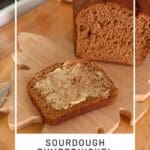
Sourdough Pumpernickel Bread with Onion and Molasses
Homemade sourdough pumpernickel bread has a rich flavor and a deep, dark color that make it stand out from an everyday sandwich loaf. This version combines whole-grain rye flour, sourdough starter, molasses, onion, and espresso powder for a loaf with a slightly sweet, earthy flavor and a savory onion finish.
Servings: 1 loaf, 12 slices
Calories: 3029kcal
As an Amazon Associate I earn from qualifying purchases.
Ingredients
Day 1: Prepare the Sponge
- 294 Grams active starter risen 1 1/3 cups
- 2 Teaspoons Espresso Powder such as Nescafe
- 227 Grams Water room-temperature
- 213 Grams Whole-Grain Rye Flour 2 cups or pumpernickel flour
- 2 Tablespoons Dried Minced Onion or 1/2 cup fresh chopped onion
Day 2: Finish the Dough
- 25 Grams Avocado Oil 2 tablespoons
- 2 Teaspoons Salt
- 85 Grams Molasses 1/4 cup
- 480 Grams All-Purpose Flour 4 cups preferably unbleached
Instructions
How to Make Sourdough Pumpernickel Bread
Day 1: Prepare the Sponge
- In a large mixing bowl, dissolve the instant espresso powder in the room-temperature water. Stir in the active sourdough starter, rye flour, and minced onion.294 Grams active starter, 2 Teaspoons Espresso Powder, 227 Grams Water, 213 Grams Whole-Grain Rye Flour, 2 Tablespoons Dried Minced Onion
- Mix until everything is combined. The mixture will be thick.
- Cover the bowl and leave it at room temperature overnight, for up to about 12 hours. The sourdough starter will have time to ferment the mixture and develop flavor before you finish the dough.
Day 2: Finish the Dough
- The following morning, stir the avocado oil, salt, and molasses into the sponge.25 Grams Avocado Oil, 2 Teaspoons Salt, 85 Grams Molasses
- Add the all-purpose flour gradually, about one cup at a time, mixing after each addition. Continue until a stiff dough forms and the ingredients are well combined.480 Grams All-Purpose Flour
- Depending on your flour and the moisture in your sourdough starter, you may need to adjust the amount of flour slightly.
- Knead and Shape. Turn the dough onto a lightly floured work surface. Knead for 1 to 2 minutes, just until the dough comes together into a cohesive ball with no dry flour remaining.
- Rye dough can be naturally tacky, so resist the temptation to add too much extra flour. Lightly oiling your hands can make the dough easier to handle.
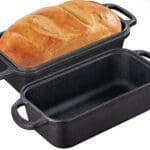
- Shape the dough into a log that fits your cast iron bread pan.
- Let the Dough Rise. Grease your cast iron bread pan and place the shaped loaf inside. The pan should be cold rather than preheated.
- Cover the pan and let the dough rise for approximately 2 to 4 hours, or until the loaf reaches the top edge of the pan.
- The rising time will depend on the strength of your starter and the temperature of your kitchen. Use the dough's appearance as your guide rather than relying on the clock alone.
- Bake the Bread. Preheat your oven to 425°F.
- Once the dough has risen, transfer the covered cast iron bread pan to the oven. Bake covered for 30 minutes to help retain moisture during the initial baking stage.
- Carefully remove the cover and continue baking for another 15 to 20 minutes, until the crust is deeply browned and set.
- Because ovens and cast iron pans vary, begin checking the loaf toward the earlier end of the uncovered baking time.
- Cool Before Slicing. Remove the bread from the pan and transfer it to a wire rack.
- Allow the loaf to cool completely before slicing. This gives the interior time to finish setting and makes it easier to cut neat slices without compressing the bread.
Notes
Tips for Making This Bread
Check for doneness: The loaf should have a well-browned crust and an internal temperature of approximately 200–205°F when measured in the center with an instant-read thermometer. Let the bread cool completely before slicing. Use an active sourdough starter. Your starter should be healthy and ready to ferment the dough. A sluggish starter may need more time to develop the sponge and raise the loaf. Don't add too much flour. Rye dough behaves differently from an all-white-flour dough. A slightly tacky texture is normal, and adding too much extra flour can make the finished loaf dry. Choose the onion that works for you. Fresh chopped onion gives the bread little bits of onion throughout, while dried minced onion is convenient to keep in the pantry. Both work well. Watch the rise, not just the clock. The dough may take less or more time to rise depending on the temperature of your kitchen and the activity of your starter. Let the loaf cool completely. Slicing sourdough bread while it's still hot can leave the interior gummy. Give it time to cool before cutting.Nutrition
Calories: 3029kcal | Carbohydrates: 600g | Protein: 80g | Fat: 33g | Saturated Fat: 4g | Polyunsaturated Fat: 7g | Monounsaturated Fat: 19g | Cholesterol: 15mg | Sodium: 753mg | Potassium: 2928mg | Fiber: 39g | Sugar: 71g | Vitamin A: 16IU | Vitamin C: 8mg | Calcium: 348mg | Iron: 32mg