Discover 40 squash varieties with photos, flavor profiles, storage tips, and the best uses for summer and winter squash from the garden to the kitchen.
If there’s one vegetable that always seems to overachieve in the garden, it’s squash.
One year it’s zucchini that won’t stop producing. The next year it’s butternut squash stacked in baskets, still keeping beautifully months after harvest. We’ve learned that knowing which squash you’re growing makes a big difference in how you cook it, store it, and enjoy every last one.
Whether you’re planning next year’s garden, shopping at a farmer’s market, or staring at an unfamiliar squash on your kitchen counter, this guide will help you identify 40 popular squash varieties, understand how they taste, and choose the best way to cook them.
From quick summer dinners to hearty winter soups, there’s a squash for every season.

Squash Identification Quick Guide
Use this quick chart to identify some of the most common squash you’re likely to find in home gardens and at farmers markets. Keep scrolling for the full guide with all 40 varieties.
| Squash | Skin Color | Shape | Best Use |
| Butternut | Tan | Pear-shaped | Soup |
| Acorn | Dark green | Ribbed | Stuffing |
| White Acorn | Creamy white | Ribbed | Roasting |
| Carnival | Green & cream | Small, ribbed | Roasting |
| Moregold | Bright orange | Round | Roasting |
| Spaghetti | Yellow | Oval | “Noodles” |
| Delicata | Cream with green stripes | Oblong | Roasting |
| Kabocha | Dark green | Flattened | Soup |
| Sugar Pie Pumpkin | Orange | Round | Baking |
| Zucchini | Green | Long | Quick cooking |
Grab the Free Printable Guide: Want a handy copy to keep in your recipe binder or take to the farmer’s market? Scroll to the bottom of this post to download The Complete Squash Variety Guide Printable PDF.
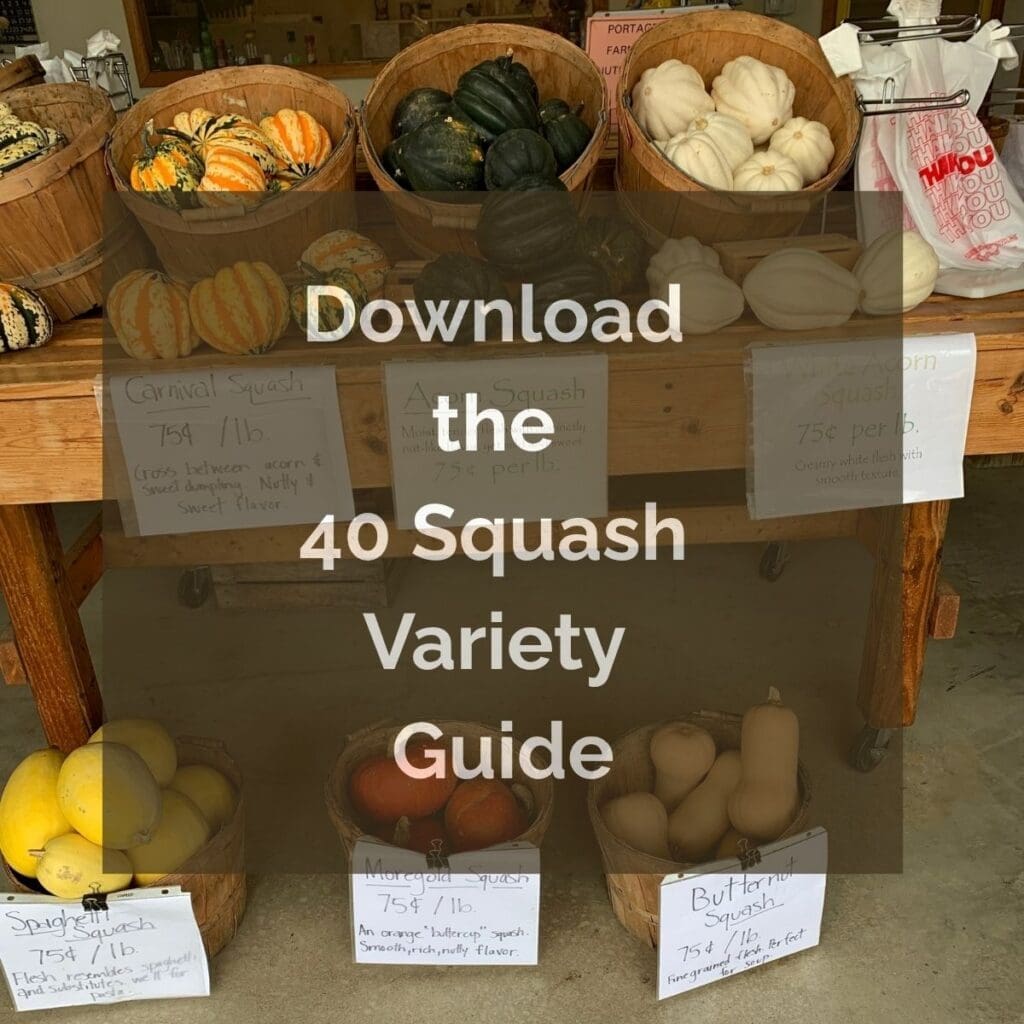
These are a few of the squash we’ve grown ourselves or picked up from our local farmers market. Seeing the colors and shapes side by side makes it much easier to identify them when you’re planning meals.
How We Use Different Squash Around the Homestead
Over the years, we’ve found that different squash earn different jobs in the kitchen. Butternut almost always becomes soup. Acorn squash gets roasted in halves for an easy supper.
Carnival and Moregold are favorites when we want a sweeter roasted side dish. And if spaghetti squash is on the counter, it’s usually because we’re planning a lighter pasta night.
Having a few different varieties means meals don’t feel repetitive, even when the garden is producing plenty.
Quick Guide: Summer vs. Winter Squash
One of the most common questions new gardeners ask is whether a squash is considered summer or winter squash. The names aren’t about when they’re grown; they’re about when they’re harvested and how they’re used.
| Summer Squash | Winter Squash |
| Harvested young | Harvested fully mature |
| Thin, edible skin | Thick, hard rind |
| Best eaten fresh | Stores for months |
| Mild flavor | Rich, sweet flavor |
| Quick cooking | Perfect for roasting and soups |
If you’re growing food for long-term storage, winter squash is one of the most rewarding crops you can plant. Many varieties keep for several months in a cool, dry place without any special equipment.
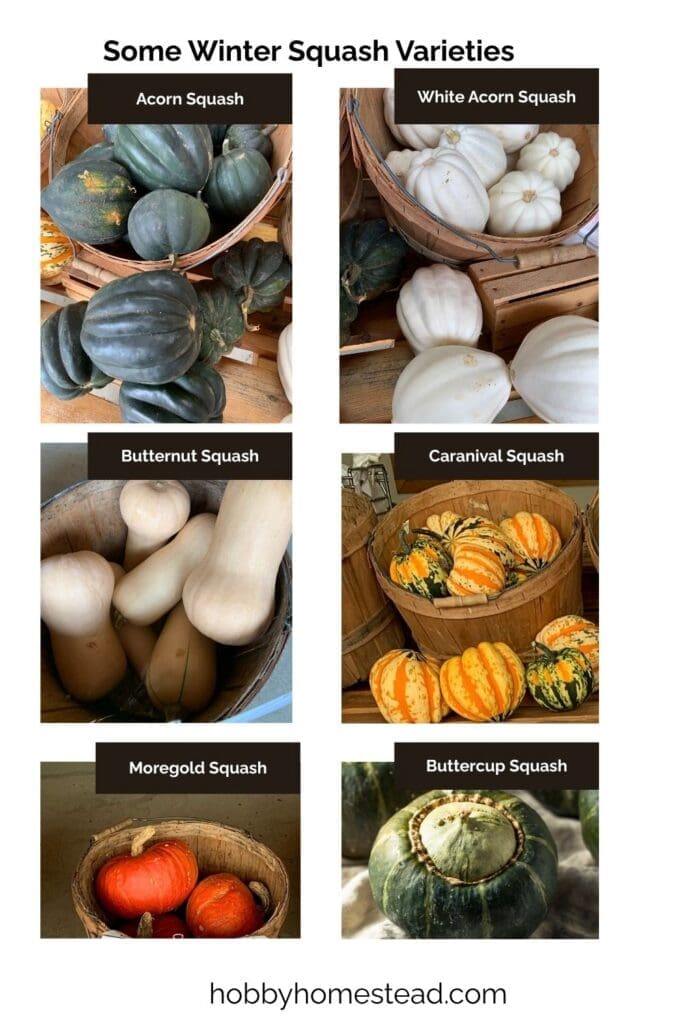
Winter Squash Varieties
Hard rind • Dense flesh • Long storage • Deep flavor
Winter squash are harvested at full maturity and develop richer flavors as they cure after picking.
1. Butternut Squash
- Flesh: Deep orange
- Flavor: Sweet, nutty
- Best Uses: Soups, purées, roasting, pies
- Why We Love It: One of the most dependable kitchen squash with a smooth texture that’s hard to beat.
Homestead Note: The fine-grained flesh blends into incredibly creamy soup without becoming stringy, which is why it’s usually the first squash I reach for when the weather cools down.
2. Acorn Squash
- Flesh: Pale yellow
- Flavor: Mildly sweet
- Best Uses: Stuffing, roasting halves
- Why It Stands Out: Its ridged shape makes a beautiful serving dish.
Homestead Note: This is one of my favorite squash to serve in halves because the natural bowl shape holds butter, herbs, or sausage stuffing beautifully.
3. Sugar Pie Pumpkin
- Flesh: Medium orange
- Flavor: Sweet, earthy
- Best Uses: Pies, purées
- Good to Know: This is the pumpkin you want for baking—not the giant carving pumpkins.
4. Kabocha (Japanese Pumpkin)
- Flesh: Deep orange
- Flavor: Very sweet, chestnut-like
- Best Uses: Roasting, soups, curries
- Bonus: The skin often softens enough to eat.
5. Red Kuri (Hokkaido)
- Flesh: Bright orange
- Flavor: Sweet and smooth
- Best Uses: Soups, purées
- Time Saver: The thin skin usually doesn’t need peeling.
6. Hubbard Squash
- Flesh: Yellow-orange
- Flavor: Sweet and rich
- Best Uses: Pies, roasting
- Storage: Excellent keeper.
7. Delicata Squash
- Flesh: Creamy yellow
- Flavor: Sweet, similar to sweet potato
- Best Uses: Roasted rings, stuffing
- Favorite Feature: The edible skin means less prep work.
8. Sweet Dumpling
- Flesh: Pale yellow
- Flavor: Sweet and mild
- Best Uses: Roasting, stuffing
- Perfect For: Individual servings.
9. Carnival Squash
- Flesh: Yellow
- Flavor: Sweet and nutty
- Best Uses: Roasting
- Fun Fact: A colorful hybrid between acorn and sweet dumpling.
Homestead Note: Carnival squash combines the best qualities of acorn and sweet dumpling squash. It’s as pretty on the table as it is delicious.
10. Musquée de Provence
- Flesh: Tan-orange
- Flavor: Deep and complex
- Best Uses: Roasting, soups
- Garden Favorite: A gorgeous French heirloom.
11. Long Island Cheese Pumpkin
- Flesh: Pale orange
- Flavor: Mild and buttery
- Best Uses: Pies, purées
- Texture: Almost custard-like.
12. Blue Hubbard
- Flesh: Orange
- Flavor: Sweet and rich
- Best Uses: Baking, soups
- Best Feature: Huge fruits that store exceptionally well.
13. Buttercup Squash
- Flesh: Deep orange
- Flavor: Sweet and dense
- Best Uses: Roasting, mashing
- Similar To: Kabocha.
Moregold is a homestead favorite.
This is one squash that deserves a little extra attention.
- Flesh: Deep orange
- Flavor: Smooth, rich, and nutty
- Best Uses: Roasting, mashing, soups
If you enjoy buttercup squash, Moregold has a similarly rich flavor and creamy texture that’s wonderful alongside roasted meats or blended into soup.
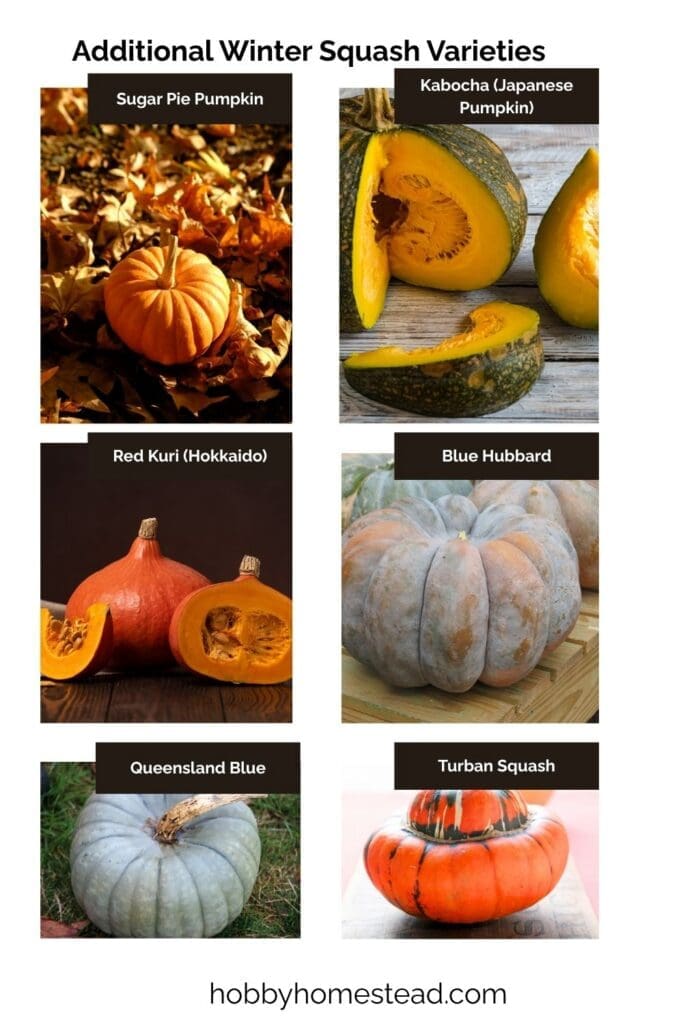
14. Turban Squash
- Flesh: Pale yellow
- Flavor: Mildly sweet
- Best Uses: Stuffing
- Looks: One of the most eye-catching squashes you’ll grow.
15. Red Warty Thing
- Flesh: Deep orange
- Flavor: Sweet and pumpkin-like
- Best Uses: Baking, roasting
- Don’t Judge It: The funny name hides a delicious squash.
16. Galeux d’Eysines
- Flesh: Salmon-orange
- Flavor: Sweet and smooth
- Best Uses: Soups, purées
- Unique Look: Peanut-like bumps cover the skin.
17. Jarrahdale Pumpkin
- Flesh: Orange
- Flavor: Mild and sweet
- Best Uses: Pies, roasting
- Origin: Australian heirloom.
18. Queensland Blue
- Flesh: Golden orange
- Flavor: Sweet and firm
- Best Uses: Roasting, baking
- Storage: Another excellent keeper.
19. Marina di Chioggia
- Flesh: Deep orange
- Flavor: Rich and sweet
- Best Uses: Gnocchi, roasting
- Heirloom: A classic Italian variety.
20. Spaghetti Squash
- Flesh: Pale yellow
- Flavor: Mild
- Best Uses: Noodle substitute, casseroles
- Best Known For: Its unique stringy texture.
Homestead Note: After roasting, the flesh naturally pulls apart into spaghetti-like strands. It’s one of the easiest squash to swap into pasta night.
21. Gem Squash
- Flesh: Yellow-green
- Flavor: Mild
- Best Uses: Baking whole
- Popular In: South Africa.
22. Golden Nugget
- Flesh: Orange
- Flavor: Mild and earthy
- Best Uses: Roasting
- Garden Bonus: Small plants fit well into compact gardens.
23. Butterkin Squash
- Flesh: Deep orange
- Flavor: Sweet and smooth
- Best Uses: Soups, pies
- Hybrid: Butternut meets pumpkin.
24. Autumn Frost
- Flesh: Orange
- Flavor: Sweet and aromatic
- Best Uses: Roasting, soups
- Beautiful: Frosted-looking skin makes it easy to spot.
25. Black Futsu
- Flesh: Deep yellow
- Flavor: Sweet and nutty
- Best Uses: Roasting
- Heirloom: Japanese variety with wonderfully warty skin.
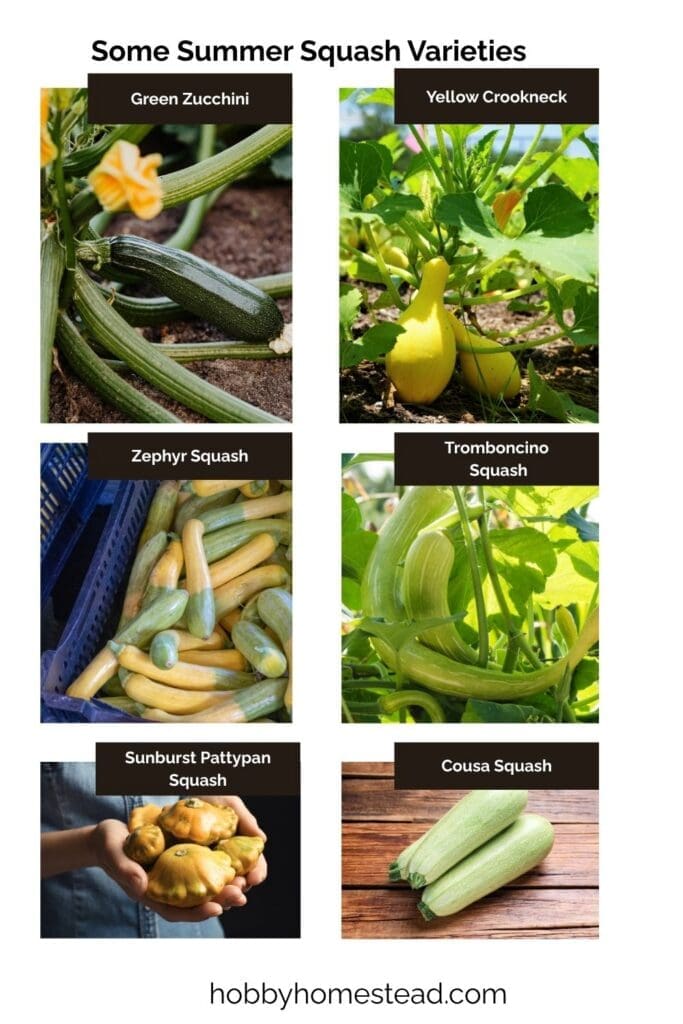
Summer Squash Varieties
Tender skin • Mild flavor • Quick cooking
Unlike winter squash, these are harvested young while their skin is still tender.
26. Yellow Crookneck
- Flavor: Mild and sweet
- Best Uses: Sautéing, casseroles
27. Yellow Straightneck
- Flavor: Mild
- Best Uses: Grilling, stir-fries
28. Green Zucchini
- Flavor: Mild and grassy
- Best Uses: Baking, sautéing
29. Black Beauty Zucchini
- Flavor: Mild
- Best Uses: Roasting, grilling
- Classic: A favorite home garden variety.
30. Cocozelle Zucchini
- Flavor: Richer and nuttier
- Best Uses: Grilling
- Heirloom: Italian favorite.
31. Costata Romanesco
- Flavor: Sweet and nutty
- Best Uses: Grilling
- Distinctive: Beautiful ribbed fruit.
32. Pattypan
- Flavor: Mild and nutty
- Best Uses: Roasting, stuffing
33. Sunburst Pattypan
- Flavor: Mild
- Best Uses: Grilling
- Bright: Cheerful yellow fruits.
34. Eight Ball Zucchini
- Flavor: Mild
- Best Uses: Stuffing
35. Cousa Squash
- Flavor: Mild and tender
- Best Uses: Stuffing
- Traditional: Common in Middle Eastern cooking.
36. Tromboncino
- Flavor: Mild
- Best Uses: Slicing, grilling
- Fun Shape: Long, curved fruits.
37. Tatume Squash
- Flavor: Mild
- Best Uses: Sautéing
- Heirloom: Mexican variety.
38. Zephyr Squash
- Flavor: Mild and sweet
- Best Uses: Roasting
- Easy To Spot: Two-tone yellow and green.
39. Magda Squash
- Flavor: Nutty
- Best Uses: Stuffing
- Popular In: Lebanese cuisine.
40. Golden Zucchini
- Flavor: Mild and slightly sweeter
- Best Uses: Sautéing, baking
- Kitchen Bonus: Adds beautiful color to mixed dishes.

Our Favorite Squash for Different Recipes
If you’re standing in front of a pile of squash wondering which one to grab, here’s a simple shortcut.
| Recipe | Best Varieties |
| Creamy soups | Butternut, Kabocha, Buttercup, Red Kuri |
| Roasted side dishes | Delicata, Carnival, Musquée de Provence |
| Stuffed squash | Acorn, Sweet Dumpling, Pattypan, Gem |
| Pumpkin pies | Sugar Pie, Long Island Cheese, Galeux d’Eysines |
| Quick weeknight dinners | Zucchini, Yellow Squash, Cousa |
| Noodle substitute | Spaghetti Squash |
How to Store Squash After Harvest
One thing we’ve learned over the years is that proper storage makes all the difference.
Winter Squash
- Cure freshly harvested squash for about 7–14 days in a warm, dry place.
- Store in a cool location around 50–55°F with good air circulation.
- Don’t stack them too tightly.
- Check occasionally and use any squash that develops soft spots first.
Many winter squash varieties will last anywhere from 2 to 6 months, and some Hubbard types can keep even longer under ideal conditions.
Summer Squash
Summer squash is best enjoyed fresh. Store it in the refrigerator for about 5–7 days, and try not to wash it until you’re ready to use it.
What to Do With a Bumper Crop
If your zucchini plants decide to produce enough squash for the whole neighborhood, you’re not alone.
We’ve found it’s easier to preserve squash a little at a time instead of waiting until there’s a mountain on the counter.
Some of our favorite ways to save the harvest include:
- Freezing shredded zucchini for breads and muffins.
- Roasting and freezing butternut squash cubes.
- Making creamy squash soups for the freezer.
- Dehydrating thin slices for snacks.
- Sharing extras with neighbors and family.
A little planning during harvest season makes winter meals much easier.
Homestead Kitchen Notes
One thing I appreciate about growing different squash varieties is that they each earn their place in the kitchen. Delicata is perfect when I don’t feel like peeling. Butternut is the first one I reach for when I’m making soup.
And when zucchini starts producing faster than I can keep up, I know it’s time to grate a few bags for the freezer before baking season arrives.
What’s the sweetest squash?
Kabocha, butternut, buttercup, and red kuri are among the sweetest varieties.
Which squash stores the longest?
Hubbard, Blue Hubbard, and Queensland Blue are known for exceptional storage life.
Can you eat winter squash skin?
Some varieties, like delicata, red kuri, and kabocha, have skins that soften enough to eat after roasting.
What’s the easiest squash to grow?
Zucchini is famously productive, while butternut squash is one of the easiest winter squash varieties for beginners.

The Wonderful World of Squash
Squash is one of those crops that rewards curiosity. Once you start growing or cooking with different varieties, it’s amazing how much flavor and texture can vary from one squash to another.
Whether you’re filling your pantry with long-keeping winter squash, harvesting armloads of zucchini, or discovering an heirloom variety for the first time, there’s always another favorite waiting to be added to the garden.
Save this guide for your next seed order or farmer’s market trip—you’ll have 40 delicious options to choose from.
Free Printable
The Complete Squash Variety Guide PDF
Save this handy kitchen reference for your recipe binder or your next trip to the farmer’s market. Click on the Photo to download the Printable PDF.
If you’re not already a newsletter subscriber, you’ll be asked to sign up for the newsletter to unlock the download.
Stay connected with Hobby Homestead
Add Hobby Homestead as a preferred source in Google Search to make it easier to find our articles when you're searching for recipes, gardening tips, preserving ideas, and more.