
Dandelion tincture concentrates the plant’s liver-supporting, digestive-aiding compounds into drops you can take daily or add to tea. The process is surprisingly simple, and the main ingredients are already growing in your yard. You don’t need a herbalism degree or fancy equipment to capture its benefits.
That bright yellow flower everyone treats like a lawn enemy is actually one of the most versatile medicinal plants on the planet. Yes, that yellow weed everyone sprays is actually liquid gold. Transform fresh dandelions intoconcentrated wellness drops with this foolproof method.
All you need are fresh dandelion flowers, a decent vodka, a mason jar, and about three weeks of patience. No cooking, no complicated extraction methods, no expensive supplies.
Here’s exactly how to turn those backyard weeds into potent wellness drops that rival anything you’d pay premium prices for at the health food store.
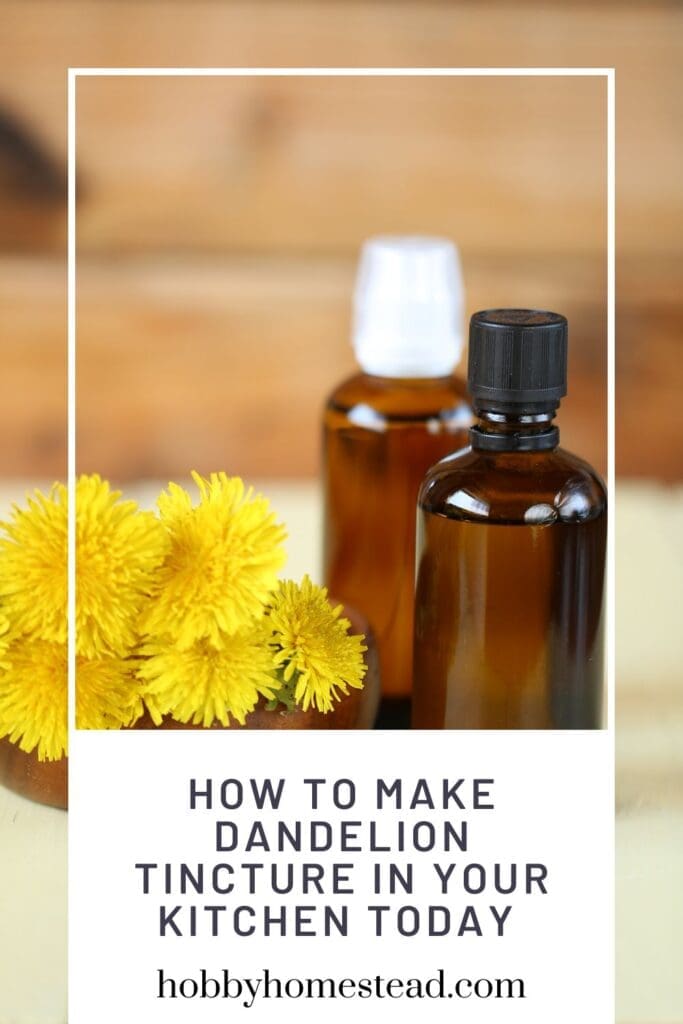
Dandelion Benefits
Before you start making your tincture, it helps to understand exactly what makes dandelions so valuable as herbal medicine.
Anti-inflammatory properties are one of dandelion’s most studied benefits. The plant contains bioactive compounds that help reduce inflammation throughout the body, which is why herbalists have used it for joint discomfort and inflammatory conditions for centuries.
Digestive support is where dandelion really shines. The bitter compounds in dandelion stimulate digestive enzyme production and bile flow, which helps your body break down fats and absorb nutrients more efficiently. This is why many people take dandelion tincture before meals to support healthy digestion.
The vitamin and mineral profile in dandelion is surprisingly robust. Dandelions contain significant amounts of vitamins A, C, and K, along with minerals like potassium, calcium, iron, and magnesium. The whole plant is considered one of the most nutrient-dense wild foods available.
These benefits concentrate beautifully into tincture form, making those daily drops a convenient way to access dandelion’s wellness properties year-round.
What You’ll Need
Getting started requires just a handful of supplies, most of which you already own.
For harvesting and prep:
- Fresh dandelion flower heads (enough to fill your jar loosely): About 3 to 4 Cups
- Small basket or bowl for collecting
- Clean kitchen towel
For the tincture:
- 16-ounce mason jar with tight-fitting lid
- 80-proof vodka (at least 40% alcohol)
- Dark glass dropper bottles for storage, or clear if you have a dark pantry
- Fine mesh strainer or cheesecloth
- Labels and permanent marker
Pick dandelions from areas you know are pesticide-free. Your own untreated lawn is perfect. Avoid roadsides, parks, and anywhere chemicals might have been sprayed.
Picking the Perfect Dandelion Heads
Timing and selection make the difference between weak and potent tincture.
Harvest on a dry, sunny morning after the dew has evaporated but before the afternoon heat. This is when the flowers are fully open and their beneficial compounds are most concentrated.
Choose flowers that are:
- Bright yellow and fully opened (not closed buds or fading blooms)
- Free from brown spots or damage
- Still attached to short stems (pinch or snip just below the flower head)
You need enough flowers to loosely fill your mason jar. Don’t pack them tight. For a 16-ounce jar, plan to collect about 3 to 4 cups of flower heads.
Gently shake each flower as you pick it to dislodge any insects. Avoid washing them if possible, as excess moisture dilutes your tincture and can cause spoilage.
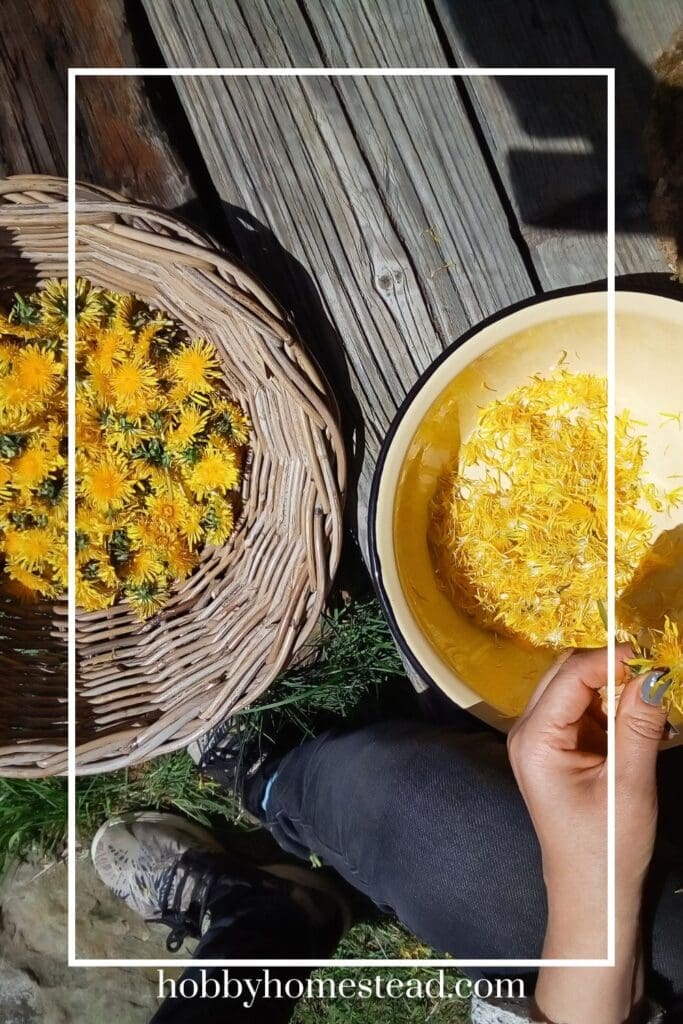
Removing the Flower Petals
This step takes patience but dramatically improves your final product.
The green base (called the calyx or sepal) contains latex-like compounds that taste bitter and can cause stomach upset in some people. Removing just the yellow petals creates a smoother, more pleasant tincture.
Here’s the fastest method:
- Hold the flower head upside down in one hand
- Pinch the green base firmly between your thumb and finger
- Twist and pull the yellow petals away from the green part
- Discard the green bases into your compost
- Collect the yellow petals in a clean bowl
Some herbalists include the entire flower head for convenience. That works, but expect a much more bitter end result. If you want something palatable enough to take straight under your tongue, take the extra 15 minutes to separate petals.
Dry the Petals
Let the petals sit spread out on a kitchen towel for about 30 minutes after you finish. This allows any remaining moisture to evaporate without over-drying the plant material.
Building Your Tincture in the Mason Jar
The actual assembly takes less than five minutes once your petals are ready.
Fill your clean, dry mason jar about two-thirds full with dandelion petals. Don’t pack them down. They should sit loosely with air pockets throughout.
Pour vodka over the petals until they’re completely submerged with at least one inch of liquid above the plant material. This is critical. Any petals exposed to air will mold.
- Use 80-proof vodka minimum (40% alcohol extracts the beneficial compounds effectively)
- Avoid flavored vodkas (plain, neutral vodka only)
- Higher proof works even better (100-proof Everclear creates a stronger extraction)
Cap the jar tightly. Label it with the contents and date using a permanent marker directly on the glass or on a piece of tape.
Give it a gentle shake to release any trapped air bubbles and ensure all petals are saturated. Place the jar in a cool, dark cabinet away from direct sunlight. A kitchen cupboard works perfectly.
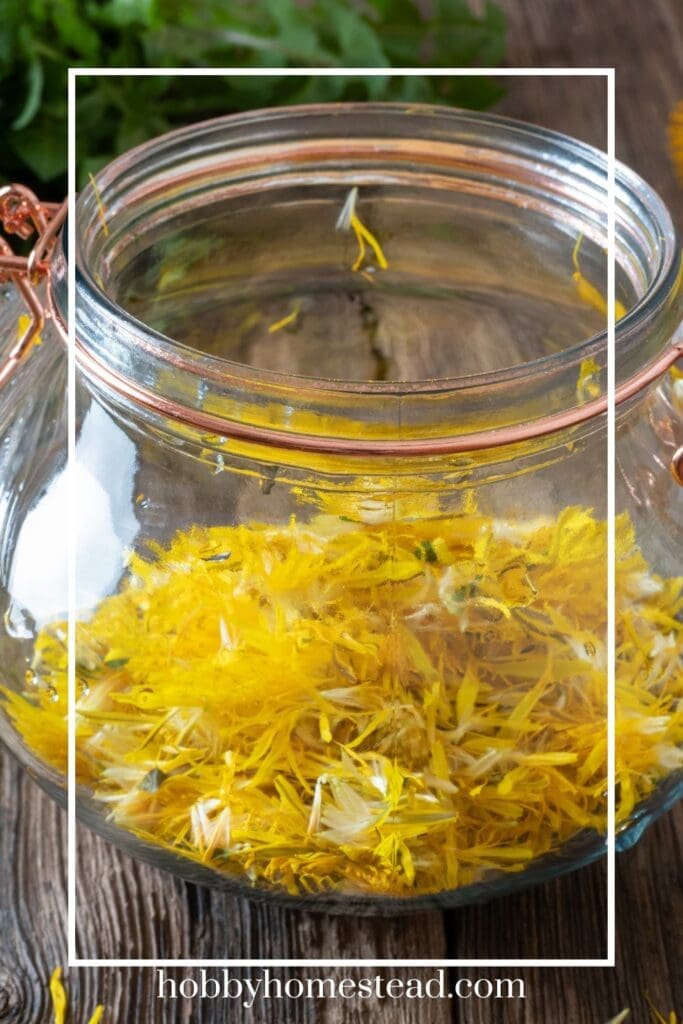
The Three-Week Waiting Game
Tinctures need time for the alcohol to extract the medicinal compounds from the plant material.
Shake your jar once daily. This redistributes the plant material and keeps the extraction process active. Morning coffee time is a great reminder.
- Week 1: The vodka turns pale yellow-green
- Week 2: The color deepens to golden amber
- Week 3: You’ll see rich, dark golden liquid
Three weeks is the minimum extraction time. Four to six weeks creates an even more concentrated tincture. Some herbalists let theirs sit for two full months.
Check periodically to make sure all petals remain submerged. If the plant material swells and rises above the liquid line, top off with a bit more vodka.
Straining and Bottling Your Finished Tincture
Once your tincture has steeped long enough, it’s time to separate the liquid from the spent petals.
Set a fine mesh strainer over a large measuring cup or bowl. Line it with two layers of cheesecloth if you want crystal-clear liquid. Pour the entire contents of your mason jar through the strainer.
Press down on the petals with the back of a spoon to squeeze out every last drop of tincture. Those petals absorbed a lot of your precious extract.
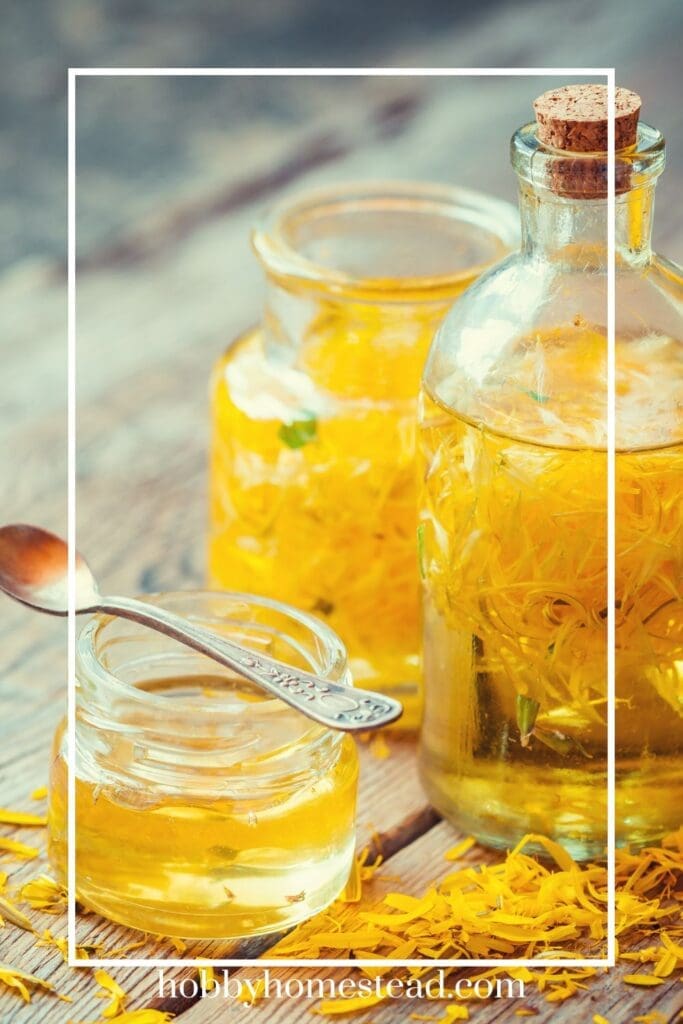
Transfer the strained liquid into dark amber or cobalt blue dropper bottles. Light degrades tincture potency, so skip clear glass bottles. You can find 2-ounce dropper bottles at any health food store or online.
Label each bottle with:
- Contents (Dandelion Flower Tincture)
- Date made
- Dosage if you have a preferred amount
Store your finished tincture in a cool, dark place. Properly made alcohol-based tinctures stay potent for 3 to 5 years.
Common Mistakes That Ruin Your Batch
Even simple processes have pitfalls. Avoid these and your tincture will turn out perfect.
Using wet or damp flowers. Moisture introduces water into your alcohol ratio, which weakens extraction and invites mold growth. Always let flowers air-dry for 30 minutes minimum after harvesting.
Packing the jar too tightly. Compressed petals don’t allow alcohol to circulate and extract evenly. Loose is better. You want liquid flowing around and through the plant material.
Skipping the daily shake. Stagnant tinctures extract less efficiently. That 10-second daily shake makes a measurable difference in potency.
Storing in clear glass. Light breaks down the active compounds in your tincture faster than you’d think. Always use dark glass for storage, and keep bottles in a cupboard between uses. If you have a nice dark pantry like we do, you can use clear jars.
Not labeling your jars. Three weeks from now, you won’t remember if that golden liquid is dandelion tincture or something else entirely. Label everything immediately.
Making your own dandelion tincture puts powerful plant medicine in your hands for less than the cost of a single bottle from the store. The process is forgiving, the supplies are minimal, and the satisfaction of creating your own remedy from backyard weeds never gets old.
Once you master this basic method, you’ll start seeing medicine everywhere you look. That’s when herbalism really gets fun.
How to Store Your Dandelion Root Tincture
Once you’ve taken the time to make your own dandelion root tincture, proper storage is what protects that effort. A well-stored tincture can stay potent and effective for years, making it a valuable addition to your natural home apothecary.
Ideal Storage Conditions
To keep your tincture at its best, store it in a cool, dark place—think pantry shelves, cupboards, or even a basement storage area. Heat, light, and air exposure can all weaken the herbal properties over time.
Use a glass jar or amber dropper bottle with a tight-fitting lid. If you’re using a standard mason jar, asimple homestead trick is to place a small piece of parchment paper between the jar and lid. This helps create a better seal and protects the tincture from excess air exposure.
Keeping your tincture out of direct sunlight is one of the easiest ways to preserve its strength and shelf life.
Shelf Life and Freshness
A properly prepared dandelion tincture—especially one made with the correct alcohol ratio—can last several years when stored correctly.
That said, it’s always good practice to:
- Label your jar with the contents and date made
- Store it where temperatures stay fairly consistent
- Check it from time to time
If you ever notice signs like:
- Cloudiness
- Mold
- An off or rancid smell
…it’s best to discard the batch and start fresh. Trust your senses—this is something homesteaders have done for generations.
Safety and Precautions When Using Dandelion Root Tincture
Dandelion root has a long history of traditional use and is generally considered gentle and safe. Still, like any herbal remedy, it’s important to listen to your body and use it thoughtfully.
Possible Side Effects
Most people tolerate dandelion root tincture well, but a few may experience mild reactions such as:
- Digestive upset (bloating, gas, or loose stools)
- Allergic reactions, especially if you’re sensitive to plants like ragweed
If you notice itching, swelling, or discomfort after taking it, discontinue use and seek medical advice.
Special Considerations
There are a few situations where extra care is wise:
- Pregnancy & Breastfeeding
While dandelion is often considered safe in small amounts, it’s always best to check with a healthcare provider before using herbal tinctures during this time. - Children
Many families use herbal remedies with their children, but it’s still a good idea to consult with a trusted healthcare professional before introducing anything new. - Medications
Dandelion root may interact with certain medications, including:- Diuretics
- Lithium
- Some antibiotics
If you’re currently taking medications, talk with your doctor before adding this tincture to your routine.
Start Slow and Pay Attention
When trying any new herbal remedy, start with a small dose and gradually increase if needed. This allows you to see how your body responds.
And as always in a homestead kitchen or herbal cupboard—when in doubt, ask a professional. A little caution goes a long way in keeping natural remedies both safe and effective.
How to Use Dandelion Root Tincture
Once your dandelion root tincture is ready, the next step is learning how to use it in a way that’s both effective and comfortable for your body. Like most herbal remedies, a simple, steady approach works best.
Finding the Right Dosage
There’s no one-size-fits-all dose when it comes to herbal tinctures. What works well for one person may be different for another, depending on things like age, body weight, and overall health.
A good rule of thumb is to start small and build धीरेly. This gives your body time to adjust and helps you find the amount that works best for you.
For most homemade dandelion root tinctures, a typical guideline is:
- 30–60 drops
- 2–3 times per day
Using a dropper bottle makes this easy and precise, which is one reason tinctures are such a favorite in a home apothecary.
As always, check any instructions if you’re using a prepared tincture, and adjust carefully based on how you feel.
Simple Ways to Take Your Tincture
One of the best things about tinctures is how versatile they are. You can take them in whatever way fits naturally into your daily routine.
1. In Warm Water (Herbal Tea Style)
This is one of the gentlest and most traditional methods.
- Add 1–2 teaspoons of tincture to a cup of warm or hot water
- Let it sit for a few minutes
- Sip slowly
This method softens the taste and turns your tincture into a simple, nourishing herbal drink.
2. Under the Tongue (Sublingual Method)
If you prefer something quick and direct, this method allows for faster absorption.
- Place your dose under your tongue
- Hold it there for 30–60 seconds
- Then swallow
It’s not the most flavorful option, but it’s efficient and commonly used.
A Gentle Reminder
Dandelion root tincture is a wonderful addition to a natural lifestyle, but it’s not meant to replace professional medical care.
If you:
- Have an existing health condition
- Are taking medications
- Or are unsure if this is right for you
…it’s always wise to check in with a trusted healthcare provider before using it regularly.
On the homestead, we value natural remedies—but we also value using them with care and good judgment.
By following these guidelines, you can effectively incorporate dandelion tincture into your wellness routine while maximizing its benefits
References
Cleveland Clinic. Can You Eat Dandelions?
Healthline.com. Dandelion: Potential Health Benefits and Side Effects
The Herb Proof. Dandelion Root Tincture Recipe: A Simple Guide