
Make these Sheet Pan Pancakes in Under 20 Minutes! Feed a crowd with ease. You deserve to sit down with your coffee still hot. You deserve delicious pancakes that come out of the oven golden brown, fluffy, and ready to slice into perfect squares. And you deserve a method that doesn’t sacrifice texture just because you’re feeding more than two people.
Sheet pan pancakes solve the logistics problem, but most versions taste like cafeteria breakfast. Flat, dense, weirdly chewy. The reason? People follow the box instructions exactly, but those ratios are built for stovetop cooking, not oven heat.
This easy sheet pan pancakes version changes the game by doubling the eggs and butter, which gives you actual lift and richness without any fancy ingredients.

Why This Recipe Works
Most sheet pan pancakes recipes fail because they treat the oven like a skillet with a timer.
It’s not. Oven heat is drier and more indirect, which means your pancake batter needs more moisture and structure to stay fluffy instead of turning into a sponge cake texture or worse, a dense brick.
Doubling the eggs gives you more protein for structure and lift. Doubling the butter adds fat that keeps the interior tender and prevents that rubbery bite you get from under-fatted batters.
And keeping the milk just enough to make the batter runny but still clinging to your whisk? That’s the sweet spot where you get spreadable batter that doesn’t turn into soup or concrete.
The high oven temp at 425 degrees also matters. It mimics the direct heat of a griddle, giving you that golden brown top and set edges in 12 to 15 minutes. Lower temps make the pancakes dry out before they brown. Higher temps burn the edges before the center cooks through.
This isn’t a hack that compromises flavor for convenience. It’s a great recipe that actually improves your odds of consistent, crowd-friendly pancakes that taste like the real thing, perfect for the whole family.

Sheet Pan Pancakes in Under 20 Minutes
As an Amazon Associate I earn from qualifying purchases.

Ingredients
- 2 Cups Pancake Mix
- 4 Large Eggs
- 4 Tablespoons Butter melted
- 1 1/2 Cups Milk only use enough to make the batter runny, still sticks to whisk
Instructions
- Preheat your oven to 425 degrees F. Do this first. The oven needs to be fully hot before the pan goes in, or your pancakes will spread too much and bake unevenly. If your oven runs cool, bump it to 435.
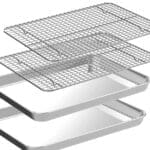
- Lightly grease a baking sheet. Use butter, cooking spray, or a thin layer of oil. Don’t skip this or you’ll be scraping pancake off the pan later. A standard half-sheet pan works perfectly. If you use a quarter-sheet, your pancakes will be thicker and need a few extra minutes.
- Add the pancake mix to a large bowl. Make sure there are no clumps. If your pancake mix has been sitting in the pantry for a while, give it a whisk to aerate it before adding the wet ingredients.2 Cups Pancake Mix
- Add 4 eggs and 4 tablespoons of melted butter. Whisk these wet ingredients together first before adding milk. This helps the butter emulsify into the batter instead of pooling.4 Large Eggs, 4 Tablespoons Butter
- Add milk slowly until the batter is runny but still clings to your whisk. Start with 1 cup, whisk thoroughly, then add the rest in small splashes. You’re looking for a consistency that drips off the whisk but leaves a thin coating. If you accidentally add too much milk, whisk in a tablespoon or two more of pancake mix to thicken it back up.1 1/2 Cups Milk
- Pour the pancake batter into your greased sheet pan. It should spread almost to the edges on its own. If it doesn’t, use a spatula to nudge it. You want an even layer, about half an inch thick.
- Bake for 12 to 15 minutes. Check at 12 minutes. The top should be golden and set, and the edges should be pulling away slightly from the pan. If the center still jiggles when you shake the pan, give it another 2 to 3 minutes. Oven temps vary, so use visual cues over the clock.
- Let it cool for 2 minutes, then slice into squares. Use a bench scraper or sharp knife. Serve immediately or keep warm in a low oven while you prep your favorite toppings.
- The whole process from bowl to table takes about 20 minutes, and you’re only actively working for five of them.
Notes
Tips from the Pros
Little moves make a big difference when you’re baking instead of flipping.Don’t overmix the batter. Stir until the ingredients just come together. Lumps are fine. Overmixing develops the gluten in the flour and makes your pancakes tough instead of tender. Twenty seconds of whisking is plenty. Use room temperature eggs if you have time. Cold eggs don’t incorporate as smoothly and can cause the melted butter to seize up into little clumps. If you forget to pull them out ahead, just run them under warm tap water for a minute. Line your sheet pan with parchment paper if you want zero cleanup. Grease the parchment paper lightly so the batter doesn’t bead up. When the pancakes are done, you can lift the whole slab out, slice it on a cutting board, and toss the paper. No scrubbing. Rotate the pan halfway through baking if your oven has hot spots. Most home ovens bake unevenly. A quick 180-degree turn at the seven-minute mark ensures even browning and prevents one side from getting too dark. Add mix-ins directly to the batter or scatter them on top after pouring. Chocolate chips, blueberries, or chopped nuts all work. If you add them to the batter, fold them in gently at the end. If you scatter them on top, press them lightly into the surface so they don’t roll off. Just don’t overload the batter or the pancakes won’t cook through evenly. These small adjustments are what separate a decent batch from one that makes people ask for the recipe next time.
Nutrition
Ingredients & What They Do
Every ingredient here has a job, and the ratios are what make this work.
- 2 cups pancake mix – This is your base. Use any boxed pancake mix you like, but the quality of the mix will show up in the final result. Cheap mixes with lots of filler give you flat, bland pancakes. Better mixes with buttermilk powder or vanilla extract already in them will give you more flavor depth.
- 4 eggs (double what the box says) – This is the most important swap. Eggs add structure, moisture, and lift. Most boxes call for 2 eggs per 2 cups of mix, which works fine on a griddle where you’re cooking small portions with direct heat. In the oven, you need more protein to hold the structure as the batter spreads and bakes. Four eggs give you that bounce and prevent the dreaded dense center. Use room temperature eggs for best results.
- 4 tablespoons butter, melted (double what the box says) – Fat equals flavor and tenderness. Boxes usually call for 2 tablespoons, which is barely enough to keep the batter from sticking. Doubling it gives you richness and keeps the texture soft instead of rubbery. Melted butter also mixes more evenly than cold, so you don’t get pockets of dry ingredients.
- 1 1/2 cups milk (only enough to make the batter runny but still sticks to your whisk) – This is where intuition kicks in. You want the batter loose enough to pour and spread, but thick enough that it clings to your whisk when you lift it. Too much milk and your pancakes turn flat and crepe-like. Too little and they bake up dense and cakey. Start with 1 cup, then add the remaining half cup slowly until you hit that sticky-but-pourable consistency.
If you’re out of butter, melted coconut oil works but adds a slight coconut flavor. Vegetable oil is neutral but won’t give you the same richness. If you’re dairy-free, use any milk alternative but stick with something with fat content like oat or soy. Almond milk is too thin and waters down the batter.

Pairing Suggestions
Sheet pan pancakes are a blank canvas, so what you serve alongside or on top matters.
Classic maple syrup and butter is always the move, but warm the maple syrup first so it doesn’t cool down your pancakes. Fresh fruit and whipped cream add brightness and cut through the richness. Crispy bacon or breakfast sausage on the side gives you the salty-sweet contrast that makes breakfast feel complete.
If you want to go bigger, try Greek yogurt with honey and granola for a lighter, tangier topping. Nut butter and sliced bananas add protein and make this feel more substantial. Lemon curd and powdered sugar turn these into a brunch-worthy situation that feels fancier than the effort required.
For drinks, cold brew or a strong cup of coffee is the obvious choice, but fresh orange juice or a smoothie balances the carbs if you’re feeding kids. Mimosas or a spiked coffee work if this is a weekend crowd.
Pair smart and your sheet pan pancakes go from convenient to memorable.
Variations & Swaps
This base sheet pan pancakes recipe is flexible enough to go in a dozen different directions without losing what makes it work.
Chocolate chip pancakes. Fold in half a cup of chocolate chips right before pouring the batter. Mini chocolate chips distribute better than regular-sized ones and won’t sink to the bottom. Add another tablespoon of chocolate chips on top for extra indulgence.
Blueberry pancakes. Scatter a cup of fresh or frozen blueberries on top of the batter after you pour it into the pan. Frozen berries won’t bleed as much if you don’t thaw them first.
Cinnamon roll pancakes. Swirl a mixture of melted butter, brown sugar, and cinnamon on top of the batter before baking. Drizzle cream cheese glaze or chocolate sauce over the top when they come out of the oven.
Protein-packed version. Replace half the pancake mix with vanilla protein powder and add an extra egg. You’ll need a bit more milk to keep the batter loose, but this adds 20 grams of protein per serving.
Gluten-free. Use a gluten-free pancake mix and follow the same ratios. The texture will be slightly denser, so add an extra tablespoon of melted butter to compensate. Some gluten-free pancake mixes may need a bit of extra baking powder for lift.
Savory pancakes. Skip the sweet toppings and add shredded cheese, cooked bacon bits, and chives to the batter. Serve with sour cream or hot sauce. It’s basically a breakfast casserole disguised as pancakes.
Every variation keeps the core method intact, which means you can experiment without risking a flop, and you’ll have enough pancakes to try different toppings.

Storage Tips
These leftover pancakes store better than you’d expect, which makes them a solid meal prep option.
Refrigerator. Let the pancakes cool completely, then stack individual pancakes between sheets of parchment paper in an airtight container. They’ll keep for up to four days. Reheat individual squares in the microwave for 30 seconds or in a toaster for crispier edges.
Freezer. Wrap individual squares tightly in plastic wrap, then place them in a freezer bag. They’ll stay good for up to two months. Reheat straight from frozen in the microwave for 60 to 90 seconds, or pop them in a 350-degree oven for 10 minutes if you’re reheating a bunch at once.
Avoid leaving them out at room temperature for more than two hours. The eggs and milk make these more perishable than you’d think. If you’re serving them at a brunch, keep them in a warm oven set to 200 degrees until everyone’s ready to eat.
Proper storage means you can make a double batch and have breakfast ready to grab all week.
Leftover Transformations
Cold sheet pan pancakes are weirdly versatile and can turn into entirely different meals, making them much more exciting than regular pancakes.
Pancake sandwiches. Slice them into rectangles and use them as bread. Fill with peanut butter and jelly, Nutella and bananas, or cream cheese and jam. Pack them for lunch and they hold up better than traditional pancakes or regular sandwiches.
Pancake French toast. Dip cold squares in an egg and milk mixture, then pan-fry them in butter until crispy on both sides. The double-cooked texture is weirdly addictive, and you can top with fresh fruit or your favorite pancake toppings.
Pancake bread pudding. Cube the leftovers, toss them with eggs, milk, cinnamon, and a bit of sugar, then bake until set. Top with maple syrup or caramel sauce.
Pancake croutons. Cube the pancakes, toss them in melted butter and cinnamon sugar, then bake at 350 degrees until crispy. Use them to top yogurt, ice cream, or oatmeal.
Pancake nachos. Cut into triangles, bake until crispy, then top with whipped cream, chocolate chips, berries, and a drizzle of syrup. It’s breakfast as a shareable dessert with different toppings that everyone can enjoy.
Leftovers don’t have to mean reheating the same thing. A little creativity turns them into something people actually look forward to eating.
This method strips away the annoying parts of making pancakes without sacrificing what makes them good. You get fluffy pancakes texture, golden edges, and the ability to feed a group without standing over a stove like a short-order cook.
Once you bake a batch, the stovetop version starts to feel like unnecessary work. Make these once and you’ll understand why this sheet pan pancakes recipe deserves a permanent spot in your breakfast rotation.
Stay connected with Hobby Homestead
Add Hobby Homestead as a preferred source in Google Search to make it easier to find our articles when you're searching for recipes, gardening tips, preserving ideas, and more.

such an easy way to make breakfast for everyone in the oven.