
Half whole wheat bread made in a bread maker is so easy. It’s soft enough for sandwiches, sturdy enough for toast, and full of that familiar sourdough flavor we all love. Best of all, it’s approachable. Even if you’re new to sourdough or baking with whole wheat flour.
By using half whole wheat flour and half white flour, this bread has a heartier, more nourishing feel than classic white sourdough, without becoming dense or heavy.
Baking bread at home has a way of slowing things down in the best possible way. There’s comfort in working with simple ingredients, feeding a sourdough starter, and letting the rhythm of a bread machine quietly do its job while you go about your day.
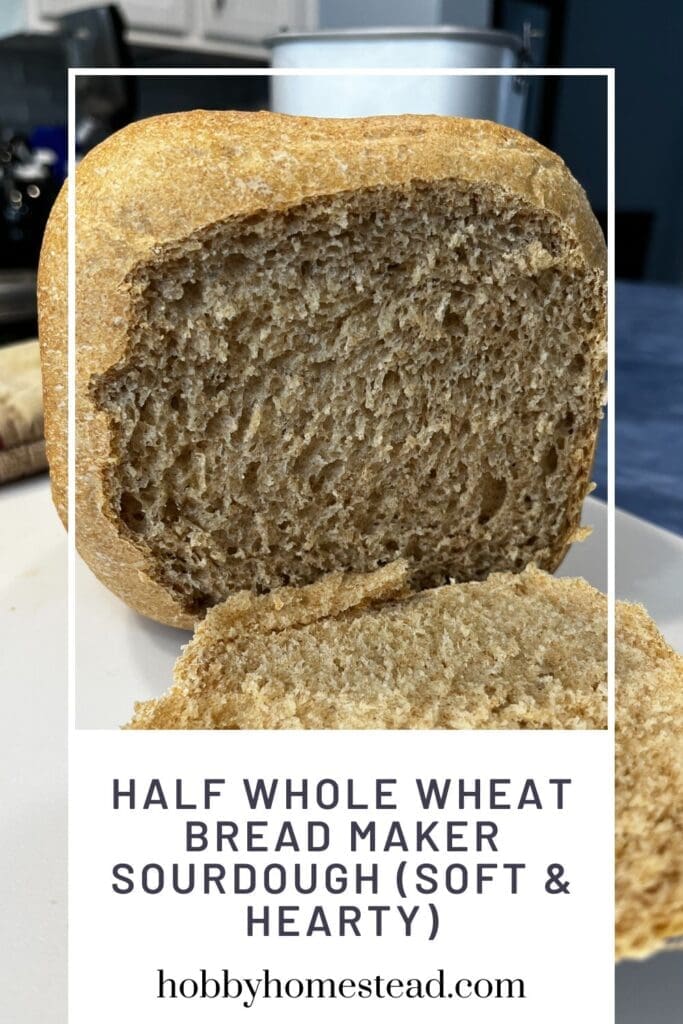
Half Whole Wheat Bread Maker Sourdough (Soft & Hearty)
As an Amazon Associate I earn from qualifying purchases.


Ingredients
1½-Pound Loaf
- 2 Teaspoon Active Dry Yeast or instant yeast
- 1 ½ Teaspoon Table Salt (9g)
- 1 ½ Teaspoons Granulated Sugar
- 1 ¼ Cups Whole Wheat Flour (150g)
- 1 ¼ Cups All-Purpose Flour (150g), or bread flour
- 2 Cups Sourdough Starter (454g), ripe (fed) or discard
- 2 Tablespoon Vegetable Oil (25g)
- 5 to 7 Tablespoons Lukewarm Water (71g–99g) as needed
1-Pound Loaf
- 1 Teaspoon Active Dry Yeast or instant yeast
- 1 Teaspoon Table Salt (6g)
- 1 Teaspoon Granulated Sugar
- ¾ Cup Whole Wheat Flour (90g)
- ¾ Cup, plus 2 Tablespoons All-Purpose Flour (110g), or bread flour
- 1⅓ Cups Sourdough Starter (301g), ripe (fed) or discard
- 1 Tablespoon Vegetable Oil (13g)
- 4 to 5 Tablespoons Lukewarm Water (57g–71g) as needed
Instructions
- Measure the Flour Correctly. For best results, weigh your flour. If measuring by volume, gently spoon flour into the measuring cup and level it off. Avoid scooping directly from the bag, which can pack in too much flour. Especially important when using whole wheat.
- Add Ingredients to the Bread Machine. Place all ingredients into the bread pan in the order recommended by your bread machine manufacturer.2 Teaspoon Active Dry Yeast, 1 ½ Teaspoon Table Salt, 1 ½ Teaspoons Granulated Sugar, 1 ¼ Cups Whole Wheat Flour, 1 ¼ Cups All-Purpose Flour, 2 Cups Sourdough Starter, 2 Tablespoon Vegetable Oil, 5 to 7 Tablespoons Lukewarm Water
- Choose the Right Cycle. Select the French Bread cycle or another long-rise setting. Whole wheat sourdough benefits from extra time to develop structure and flavor.
- Check the Dough During Kneading. About 10 minutes into kneading, open the lid and check the dough. It should form a soft, slightly tacky dough ball. If it looks dry or stiff, add water 1 tablespoon at a time. If it looks overly sticky or loose, sprinkle in a little flour
- Whole wheat dough may feel slightly firmer than white dough, but it should still be smooth and elastic.
- Bake and Cool. When the cycle finishes, remove the bread promptly and cool on a wire rack. Let the loaf cool completely before slicing to avoid a gummy texture.
Notes
Notes from the Kitchen
Why Whole Wheat Needs a Little Extra Care Whole wheat flour absorbs more liquid than white flour and contains the bran and germ of the wheat kernel. That’s what gives it extra nutrition. But it also means the dough needs a bit more water and a longer rise to stay soft and well-shaped. Don’t worry, the bread maker handles most of this for you. You’ll just want to keep an eye on the dough during the first knead. Water amounts are approximate and will vary depending on your sourdough starter’s hydration. The exact amount of water you’ll need depends on the hydration of your sourdough starter. Starters can vary widely—from thick and stiff to loose and pourable. The goal is always the same: a soft, cohesive dough that holds its shape as it kneads. Trust your eyes more than the numbers.- The dough should be soft and slightly tacky, not dry or stiff.
- Always check the dough during the first 10 minutes of kneading and adjust as needed.
- Whole wheat dough may feel a bit firmer than white dough, but it should still form a smooth dough ball.
- Let the loaf cool completely before slicing to avoid a gummy crumb.
Tips from Our Bakers
- Start with Less Water. Whole wheat absorbs slowly, so begin with the lower amount of water and add more as needed.
- Discard Works Fine. Use discard that has been fed within the last week for best rise and flavor.
- Oil vs. Water. Vegetable oil helps keep the crumb soft. For a crustier loaf, replace the oil with water.
- Best Bread Machine Cycles. French or whole-grain cycles work best due to their longer rise times.
- Programmable Machines. If your machine allows custom settings, aim for longer rises similar to French bread cycles.
Nutrition
Storage & Reheating
- Room Temperature. Store cooled bread loosely wrapped for up to 2 days.
- Freezing. Slice and freeze in an airtight bag for up to 3 months.
- Reheating. Toast slices directly from frozen or warm the whole loaf in a 350°F oven for 10–15 minutes.
Good variation ideas for this recipe
- Honey Whole Wheat Sourdough
Replace the sugar with honey for a slightly sweeter, more traditional whole wheat flavor. - No-Oil Version (Crustier Loaf)
Replace the vegetable oil with water for a chewier crust and more rustic texture. - Seeds or Grains
Add 2–3 tablespoons of sunflower seeds, flaxseed, or rolled oats during the mix-in phase. - Extra Tangy Sourdough
Use all discard starter and reduce the yeast slightly for more sour flavor.
Homestead Baking Tip
On the homestead, bread baking works best when it becomes part of the weekly rhythm.
Choose one or two days a week to feed your starter and bake bread. Once your starter is active, this loaf is a great way to use it regularly without stress or waste.
Many kitchens keep a sliced loaf in the freezer and pull out what’s needed each morning. Great for fresh toast, sandwiches, or a quick side for supper. Simple systems like this make homemade bread practical, not just a special occasion.
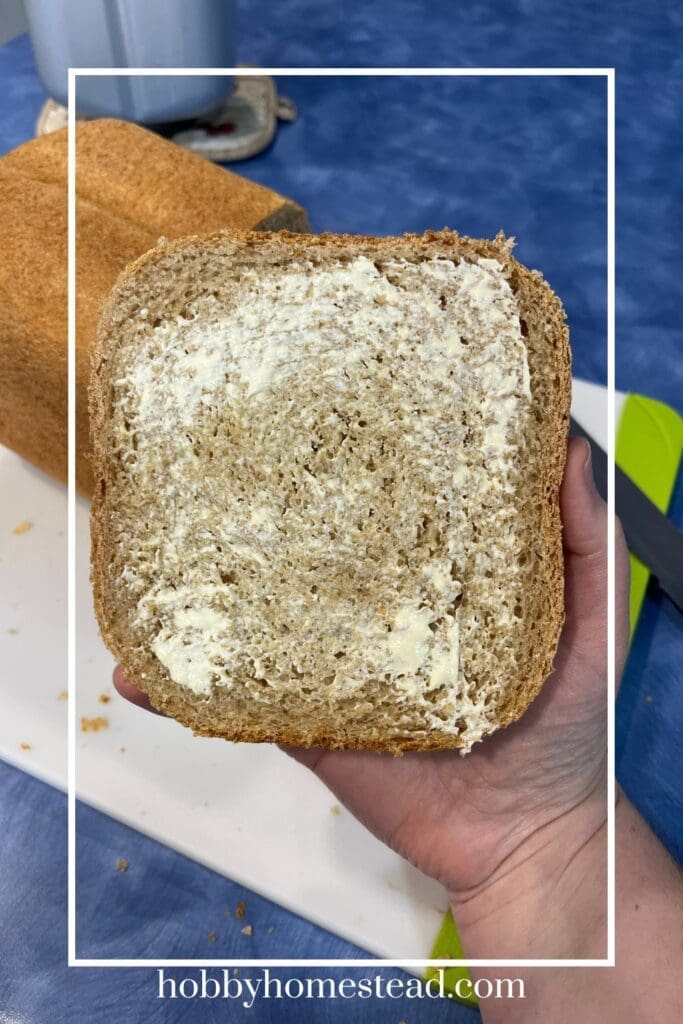
Troubleshooting Half Whole Wheat Sourdough
Whole wheat sourdough can be a little more forgiving than people expect. But it does behave differently than white bread. If your loaf didn’t turn out exactly as planned, here’s what may have happened and how to fix it next time.
Bread Didn’t Rise Enough
Possible causes:
- Starter was weak or very cold
- Too much whole wheat flour without enough water
- Rise cycle was too short
What to try next time:
- Use starter that has been fed within the last week and is at room temperature
- Make sure the dough feels soft during kneading—add water if it looks stiff
- Choose a French or whole-grain cycle with a long second rise
Whole wheat needs both moisture and time to rise well.
Loaf Is Dense or Heavy
Possible causes:
- Dough was too dry
- Too much flour was added during kneading
- Starter or yeast lacked strength
What to try next time:
- Weigh flour when possible or spoon and level carefully
- Avoid adding extra flour unless the dough is very sticky
- Check the dough early—it should form a smooth, slightly tacky ball
A soft dough leads to a lighter loaf.
Bread Collapsed After Baking
Possible causes:
- Dough rose too much during the final rise
- Too much water was added
- Yeast activity was too strong
What to try next time:
- Use the lower end of the water range
- Avoid over-proofing by using a recommended long-rise cycle, not extra rise time
- Measure yeast carefully
A loaf that rises too high can’t always support itself once baked.
Crumb Is Gummy or Sticky
Possible causes:
- Bread was sliced while still warm
- Too much moisture in the dough
- Bread wasn’t baked long enough
What to try next time:
- Let the loaf cool completely before slicing
- Reduce added water slightly
- If your machine allows, extend the bake time by 5–10 minutes
Whole wheat bread continues to set as it cools—patience really matters here.
Every sourdough loaf teaches you something. Small adjustments, especially with water and rise time, make a big difference with half whole wheat dough. Once you find the sweet spot for your starter and bread machine, this loaf becomes wonderfully reliable.
Ideas for Using this Bread
Examples:
- Sandwich bread for lunches
- Toast with butter and jam
- Grilled cheese
- French toast (great with whole wheat!)
Can I make this recipe with 100% whole wheat flour?
You can, but the loaf will be denser and will need more water and a longer rise. For most home bakers, using half whole wheat flour gives the best balance of nutrition, texture, and reliable results.
Can I skip the yeast and use only sourdough starter?
This recipe was developed with yeast to ensure consistent rise in a bread machine.
While it’s possible to make a yeast-free version, it requires longer fermentation times and more experimentation. For everyday homestead baking, the added yeast keeps things simple and dependable.
Why does my dough look different than yours?
Sourdough starters vary widely in hydration and strength. That’s why checking the dough during the first knead is essential. Focus on how the dough feels and moves, not exact measurements.
Can I use discard straight from the fridge?
Yes, as long as it has been fed within the last week. Very old or neglected starter may not give good rise.
What if my bread machine doesn’t have a French bread cycle?
Use the longest rise cycle available, such as whole wheat or artisan. Longer rise times help whole wheat sourdough develop better structure and flavor.
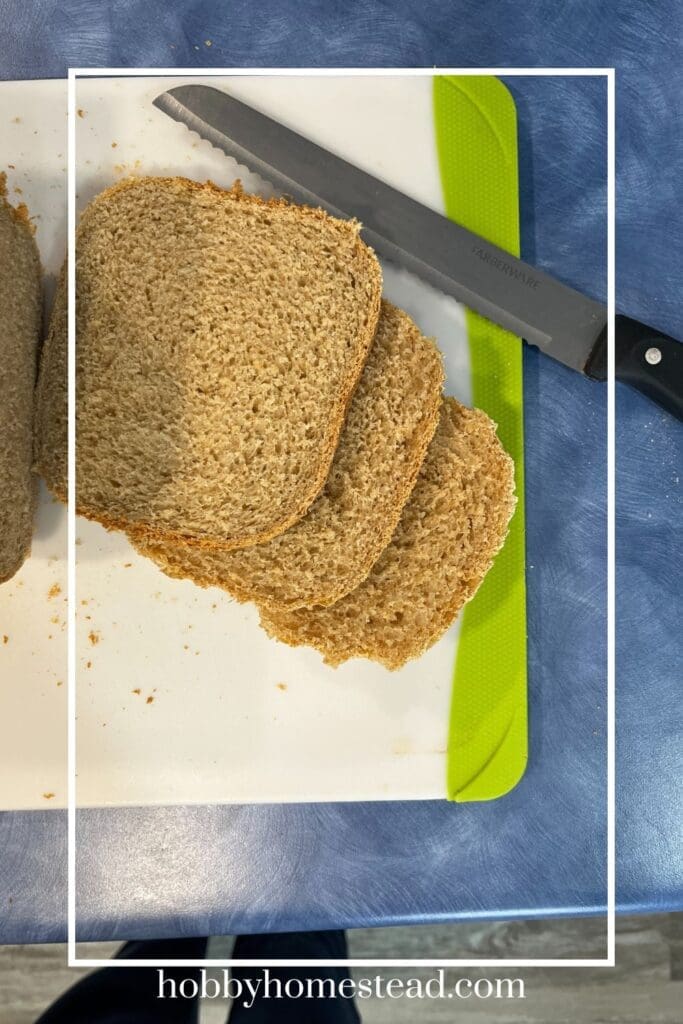
Delicious Homemade Bread
This half whole wheat bread maker sourdough loaf is a wonderful everyday bread. It’s so nourishing, practical, and deeply satisfying to make. It’s the kind of recipe that fits naturally into our home life: dependable, flexible, and rooted in tradition, yet perfectly suited for modern kitchens.


My family loved this and it is so easy using a bread machine.