
Learn practical tick prevention tips for families, pets, and livestock, including daily tick checks, protective clothing, safe tick removal, and when to seek medical or veterinary advice.
Your rosemary hedge may already be a tick barrier. These daily habits protect kids, dogs, and livestock without complicated routines or harsh chemicals.
Your herb garden might already be working harder than you think.
Strategic placement of rosemary and lavender creates natural barriers that keep ticks away from walkways, play areas, and animal pens all season long. When you live on a homestead, outdoor time is not optional. Collecting eggs, tending livestock, mowing pastures, gardening, stacking firewood, and exploring wooded trails all bring you into the places where ticks thrive.
These tiny parasites may be small, but they can pose serious concerns for people and animals. In many parts of the country, ticks can carry illnesses such as Lyme disease and other tick-borne diseases that affect both humans and animals.
The good news is that effective tick prevention does not require complicated routines or expensive products.

Why Daily Tick Checks Beat Everything Else
You can spray, plant, and strategically dress all you want, but nothing beats finding a tick before it has time to transmit disease. Ticks typically need to be attached for 24 to 48 hours before they can spread most illnesses, which means your daily inspection routine is your strongest line of defense.
Most people focus on gear and yard work while ignoring the single habit that catches problems early. Daily checks take less than five minutes and catch ticks when removal is simplest and risk is lowest. The earlier you find them, the better the outcome.
For people, focus on these high-risk zones:
- Behind the knees
- Around the waist and beltline
- Underarms
- Scalp and hairline
- Behind the ears
- Around sock lines
For pets, run your hands slowly through the coat and feel for bumps around:
- Ears and inside ear flaps
- Neck and under collars
- Between toes
- Under the tail
- Armpits and groin
Children often play close to the ground and may not notice ticks crawling on them. Pay extra attention to their hair, neck, and any area where clothing fits snugly. Ticks can be extremely small, especially in immature stages, so use good lighting and take your time.
Make this part of your evening routine just like washing hands before dinner. Consistency turns this from a chore into a habit that protects everyone without conscious effort.
Daily Tick Prevention Checklist
- Wear long pants tucked into socks
- Use light-colored clothing
- Check children and pets every evening
- Shower after outdoor work
- Wash outdoor clothes promptly
- Inspect livestock during routine care
- Remove ticks immediately with tweezers

Best Clothing to Prevent Tick Bites
Ticks cannot fly or jump. They wait on vegetation and grab onto whatever brushes past. Your clothing can stop them before they ever reach skin, but only if you wear it correctly.
The basics work:
- Long pants tucked into socks
- Long-sleeved shirts with cuffs that fit snugly
- Closed-toe shoes or boots
- Light-colored clothing so you can spot ticks quickly
- Hats when working near brush or wooded edges
Tucking pants into socks looks odd, but it forces ticks to crawl up the outside of your clothing where you can see them instead of giving them direct access to your legs. Light colors make even tiny ticks visible against fabric, turning your clothing into an early warning system.
Keep a designated set of outdoor work clothes for mowing, gardening, and animal chores. When you come inside, remove them immediately and toss them in the wash. This keeps any hitchhiking ticks contained instead of spreading them through your house. Showering within two hours of outdoor work washes off any unattached ticks and gives you a natural opportunity for a full body check.
Where to Check for Ticks
| People | Pets | Livestock |
| Behind knees | Ears | Ears |
| Waistline | Under collars | Tail area |
| Underarms | Between toes | Udder or groin |
| Scalp and hairline | Under tail | Under belly |
| Behind ears | Armpits | Neck folds |
| Sock lines | Groin | Around horns or mane |
Protecting Dogs and Outdoor Cats from Ticks
Dogs and outdoor cats move through tall grass, brush, and wooded areas where ticks are most concentrated. They are tick magnets by nature of how they explore. A single walk through an overgrown field can result in dozens of ticks.
Work with your veterinarian to choose appropriate prevention methods based on your animal’s species, age, health, and lifestyle. Some products repel ticks, others kill them after attachment, and many do both. What works for a healthy adult dog may not be safe for a pregnant cat or a puppy.
Beyond products, these habits make a difference:
- Keep pet bedding clean and wash it weekly during tick season
- Mow the areas where dogs exercise and play regularly
- Check pets every single day, even if they are on prevention
- Limit roaming in dense brush and overgrown areas
- Inspect pets immediately after walks or outdoor time
No prevention method is 100% effective. Even pets on prescription tick prevention can occasionally bring a tick home. Your hands-on daily inspection catches what products miss. Run your fingers slowly through their coat instead of just looking. You will feel small bumps that your eyes would skip over, especially on dark-haired or thick-coated animals.
Tick Prevention for Goats, Horses, and Cattle
Goats, sheep, horses, and cattle encounter ticks in pastures, along fence lines, and near wooded edges. Livestock tick checks happen naturally during routine handling, feeding, and grooming, but many owners do not realize what they are looking for until an infestation becomes obvious.
Watch for:
- Clusters of ticks around the ears, udders, and tail
- Irritation, scratching, or rubbing against fences
- Lethargy or loss of appetite
- Unusual swelling or lumps
Pasture management reduces tick habitat. Mowing along fence lines, clearing brush piles, and keeping grass trimmed in high-traffic areas limits the places where ticks wait for hosts. Rotational grazing also helps because it reduces the time animals spend in any single area, breaking the tick life cycle.
Consult your veterinarian for approved products and management strategies specific to each species. What works for horses may be toxic to goats. What is safe for cattle may not be labeled for sheep. Always follow product guidelines and withdrawal periods if animals are used for meat or milk.
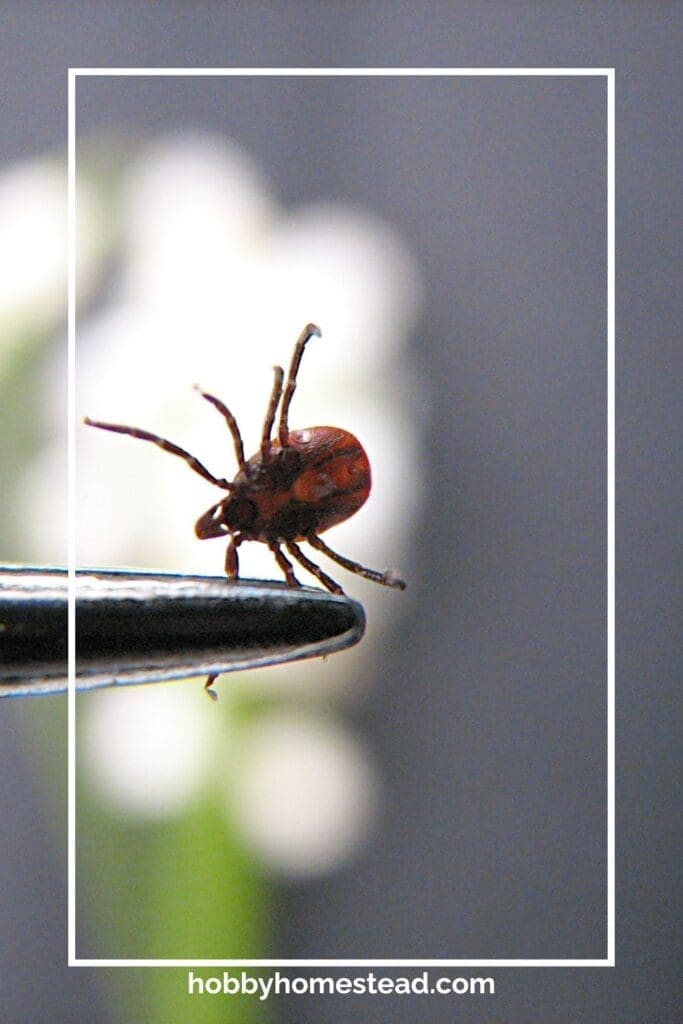
How to Remove a Tick Safely
When you find an attached tick, removal technique matters. The goal is to get the entire tick out without leaving mouthparts embedded in the skin or causing the tick to regurgitate into the bite wound.
- Use fine-tipped tweezers and grasp the tick as close to the skin as possible
- Pull upward with steady, even pressure without twisting
- Clean the bite area with soap and water
- Disinfect the skin
- Wash your hands thoroughly
- Save the tick in a sealed bag or container with the date and location of the bite
Avoid folk remedies like petroleum jelly, nail polish, or heat. These methods do not work and can actually increase disease transmission risk by stressing the tick and causing it to release more saliva into the wound.
Monitor the bite site and watch for symptoms like fever, rash, fatigue, joint pain, or flu-like symptoms in the days and weeks following the bite. Not everyone develops the classic bull’s-eye rash associated with Lyme disease, so any unusual symptoms warrant a call to your healthcare provider or veterinarian.
When to Call a Doctor or Veterinarian
Some symptoms require immediate attention. For people, contact a healthcare professional if you develop fever, rash, fatigue, joint pain, or flu-like symptoms after a tick bite. Early treatment often leads to better outcomes, and many tick-borne diseases respond well to prompt intervention.
For pets and livestock, seek veterinary advice if you notice lethargy, fever, loss of appetite, lameness, unusual swelling, or behavior changes. Animals cannot tell you when something feels wrong, so subtle shifts in behavior often signal bigger problems.
Keeping the tick you removed helps with identification and diagnosis if symptoms develop later. Store it in a sealed container with a note about when and where it was found.
Symptoms That Require Professional Attention
| Humans | Pets and Livestock |
| Fever | Fever |
| Rash | Lethargy |
| Fatigue | Loss of appetite |
| Joint pain | Lameness |
| Flu-like symptoms | Unusual swelling |
| Headache | Behavior changes |
A few consistent habits make tick prevention manageable even on a busy homestead. Daily checks, protective clothing, attentive care for animals, and quick action when ticks are found create a layered defense that reduces risk without adding hours to your day.
Homestead life is meant to be enjoyed, and ticks do not have to keep you from spending time outdoors. Awareness beats fear every time.
Stay connected with Hobby Homestead
Add Hobby Homestead as a preferred source in Google Search to make it easier to find our articles when you're searching for recipes, gardening tips, preserving ideas, and more.