
Learn exactly where to plant tick-repelling herbs around your property, including walkways, patios, chicken coops, and woodland edges for natural tick control.
You already planted lavender, rosemary, and thyme in your garden beds.
They smell amazing, they look beautiful, and you read somewhere they might help with ticks. But here’s the problem: if they’re tucked into a corner bed or scattered randomly across your yard, they’re doing almost nothing to protect the areas where you and your family actually spend time. Ticks don’t wander into flower beds looking for a snack. They wait on grasses and low plants along pathways, near doors, around coops, and at the edges of wooded areas where people and pets brush past them daily.
Strategic placement transforms fragrant herbs from decorative plants into functional scent barriers.
This guide shows you exactly where to position tick-repelling herbs so they work hardest in the zones where ticks are most likely to encounter your family and animals.

Why Placement Beats Plant Choice Every Time
Ticks can’t fly, and they don’t jump. They climb onto vegetation and wait in a behavior called questing, usually positioned from ground level to about knee height, sometimes higher depending on the plant and their target host.
That single fact changes everything about how you should plant herbs for tick management. The most effective plantings aren’t the biggest, the prettiest, or even the most aromatic in isolation. They’re the ones located where people and pets move through daily, where leaves get brushed or crushed naturally, and where aromatic oils are released into the air at the exact moment ticks are likely to be questing for a host.
Here’s what makes a planting spot effective:
- High foot or paw traffic that naturally disturbs plant leaves
- Proximity to areas where ticks typically quest for hosts
- Dense groupings that create concentrated scent zones rather than isolated pockets
- Positioning at or below knee height where ticks are actively waiting
A single rosemary plant in a remote garden bed might smell wonderful when you walk past it once a week, but it has almost zero practical impact on tick encounters. Three rosemary plants flanking your back door, brushed every time someone enters or exits, create a functional barrier in a high-value zone.
The goal is not to make your whole property smell like an herb garden. It’s to build overlapping scent barriers in the specific corridors and zones where ticks and hosts intersect.
| Property Area | Best Herbs |
| Walkways | Thyme, Lavender, Catnip |
| Patios | Lemongrass, Basil, Rosemary |
| Entry Doors | Rosemary, Mint, Basil |
| Chicken Coops | Garlic, Oregano, Thyme |
| Woodland Edges | Lavender, Sage, Oregano |
The Highest-Value Planting Zones on Your Property
Not all locations are equal when it comes to tick exposure. Some areas funnel traffic, some border tick habitat, and some are gathering spots where people and pets linger. Focusing your plantings on these zones gives you the most protection per plant.
Walkways and Garden Paths
Every step along a path is an opportunity to release fragrance from herbs planted at the edges or between pavers. This makes paths one of the single best locations for tick-repelling plants.
Plant creeping thyme directly between stepping stones so it gets crushed underfoot with every pass. Line path edges with lavender or catnip to create a fragrant border that brushes against legs and releases oils. Low-growing herbs work best here because they stay in the strike zone where ticks quest and where foot traffic naturally makes contact.
Patios, Decks, and Outdoor Seating Areas
Outdoor living spaces are natural gathering points, which makes them prime real estate for container plantings that can be grouped, moved, and refreshed seasonally.
Position large containers of lemongrass, rosemary, or basil near seating areas where people relax and pets lounge. These plants release scent when touched and create a localized barrier around the space. Containers also let you bring tender herbs like lemongrass indoors during cold months and rotate in fresh basil during peak tick season in late spring and summer.
Group three or more containers together rather than scattering single pots. Clustering creates stronger, overlapping scent zones.
Doorways and Entry Points
Ticks hitch rides on clothing, shoes, and pets. Placing aromatic herb containers on both sides of frequently used doors creates a scent checkpoint right where ticks are most likely to be carried toward your home.
Rosemary, mint, lavender, and basil all work well in pots flanking entryways. Position them close enough that you brush the leaves when entering and leaving. This isn’t just about scent in the air. It’s about releasing volatile oils at the exact moment someone is moving through the threshold.
- Two rosemary containers
- Lavender along the walkway
- Creeping thyme between stepping stones
Refresh these containers seasonally and keep them pruned for dense, bushy growth that maximizes leaf contact.

Garden Gates and Fence Openings
Gates funnel movement into concentrated paths, making them ideal choke points for scent barriers. Ticks waiting on nearby vegetation are more likely to encounter a host passing through a gate than wandering across an open lawn.
Use symmetrical groupings on both sides of gates and fence openings. Plant lavender, thyme, sage, or oregano in clusters that create overlapping scent as people and animals move through. Think of this as building a fragrant doorway that every person and pet passes through multiple times a day.
Around Dog Runs, Kennels, and Pet Areas
Dogs are one of the most common tick carriers on any property. Planting hardy, dog-safe herbs around kennel perimeters, along run fences, and near water and food stations adds a layer of protection exactly where your pets spend time.
Lavender, thyme, and rosemary are excellent choices. Avoid planting mint directly in the ground near dog areas because it spreads aggressively, but containers of mint placed strategically work well. Position plants where dogs won’t dig them up or trample them during play.
The goal is to create a scent buffer between your dog’s activity zone and the surrounding landscape where ticks are waiting.
Chicken Coops and Livestock Areas
Chickens, goats, and other livestock attract ticks, and their enclosures often border the kinds of tall grass and brush that harbor tick populations.
Plant garlic, oregano, sage, and thyme along coop perimeters, near gates, and around feed storage areas. These herbs tolerate foot traffic, establish quickly, and create dense, low-growing barriers. Garlic can be planted in rows and left to naturalize, creating a long-term border that requires almost no maintenance.
- Garlic planted in rows
- Oregano and thyme near the entrance
Position plantings where they won’t get destroyed by scratching hens or grazing animals, but close enough to create a fragrant boundary around the enclosure.
Woodland Edges and Brush Borders
The transition zone between mowed lawn and wooded areas is peak tick habitat. Ticks thrive in leaf litter, tall grass, and shaded brush, and they quest along the edges where hosts are most likely to pass.
Create a wide border of lavender, sage, oregano, and rosemary along these edges. In cold climates, substitute rosemary with hardy alternatives like Russian sage. Combine herb plantings with a 3-foot-wide gravel or wood-chip path to create a physical and aromatic barrier that discourages tick movement from woods to lawn.
- 3-foot-wide border of lavender, sage, and oregano
- Gravel path separating woods from lawn
This is one of the most impactful planting zones because it addresses the source area where tick populations are highest.
Common Mistakes That Waste Your Effort
Even the right herbs in decent locations can fail if you make these planning and maintenance errors.
Scattering single plants too far apart. One lavender plant every 10 feet along a path creates gaps in scent coverage. Cluster plants in groups of three to six so their scent zones overlap.
Planting in low-traffic areas. A beautiful herb spiral in the back corner of your yard might look great, but if no one walks past it daily, it’s not contributing to tick management.
Ignoring mature plant size. Herbs like rosemary and lavender can grow 3 feet wide or more. Space them appropriately so they fill in and create dense barriers rather than sparse, leggy plantings.
Overwatering aromatic herbs. Most Mediterranean herbs produce stronger essential oils when grown in lean, well-drained soil. Overwatering dilutes their scent and weakens their effectiveness.
Failing to prune for bushy growth. Woody herbs like rosemary and lavender should be pruned regularly to encourage dense, leafy growth. Tall, sparse plants have less surface area for scent release.
Avoiding these mistakes turns average plantings into genuinely effective barriers.
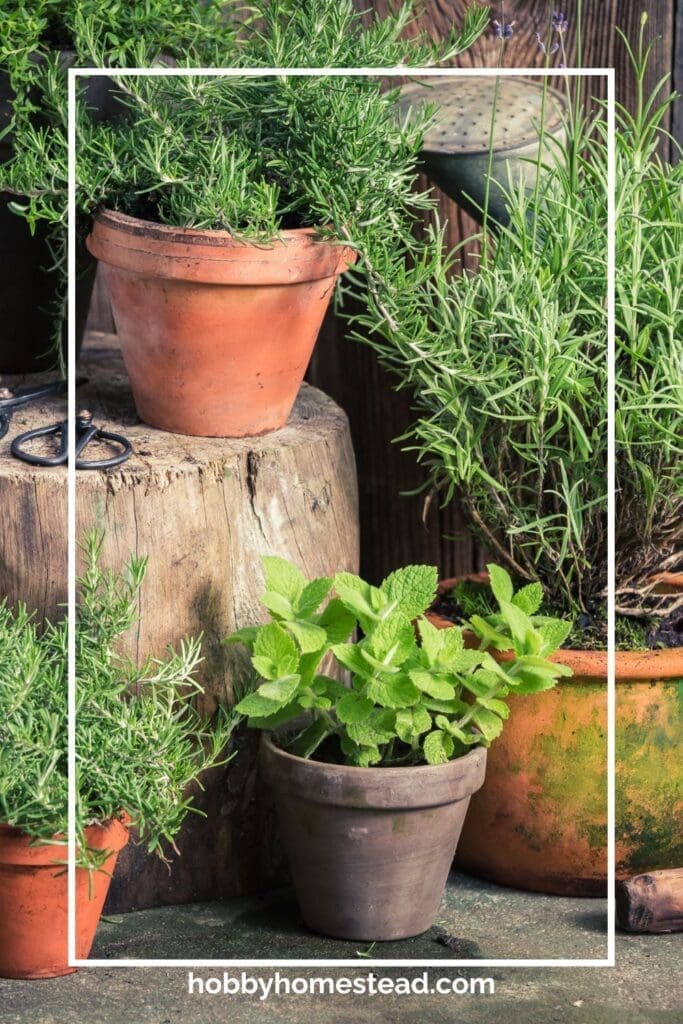
Containers vs. In-Ground: Choosing the Right Method
Both planting methods have specific advantages depending on the herb, your climate, and how you use your outdoor spaces.
When containers work best:
- Mint, which spreads aggressively and needs containment
- Basil and lemongrass, which are tender annuals in most climates
- Rosemary in zones colder than Zone 7
- High-traffic areas like patios and entryways where portability matters
- Spaces where you want seasonal flexibility
Containers let you group plants strategically, move them as needed, and bring tender species indoors before frost.
When in-ground plantings work best:
- Thyme, lavender, oregano, sage, and garlic
- Perimeter borders and woodland edges
- Long-term, low-maintenance barriers
- Areas where naturalized, spreading growth is an advantage
In-ground plantings establish deeper root systems, require less frequent watering, and create permanent scent barriers that strengthen as they mature.
Most effective designs use a combination of both methods: perennial borders for long-term structure and seasonal containers for flexibility and high-impact zones.
Strategic placement is what transforms aromatic herbs from garden decorations into functional tick barriers. Focus on the zones where your family, pets, and livestock move daily. Use dense clusters instead of scattered singles. Combine containers with in-ground plantings for flexibility and permanence.
As these plantings mature and fill in, they’ll create overlapping scent zones that add beauty, provide harvests, and build another layer of natural protection into the spaces you use most.
Stay connected with Hobby Homestead
Add Hobby Homestead as a preferred source in Google Search to make it easier to find our articles when you're searching for recipes, gardening tips, preserving ideas, and more.